360° Spine Care | Dr. Rohit Thaker | Best Spine Surgeon Ahmedabad
Ergonomics & Back Pain: How Simple Workplace Changes Can Protect Your Spine
By Dr. Rohit Thaker – Spine Specialist & Minimally Invasive Spine Surgeon
11/24/20253 min read
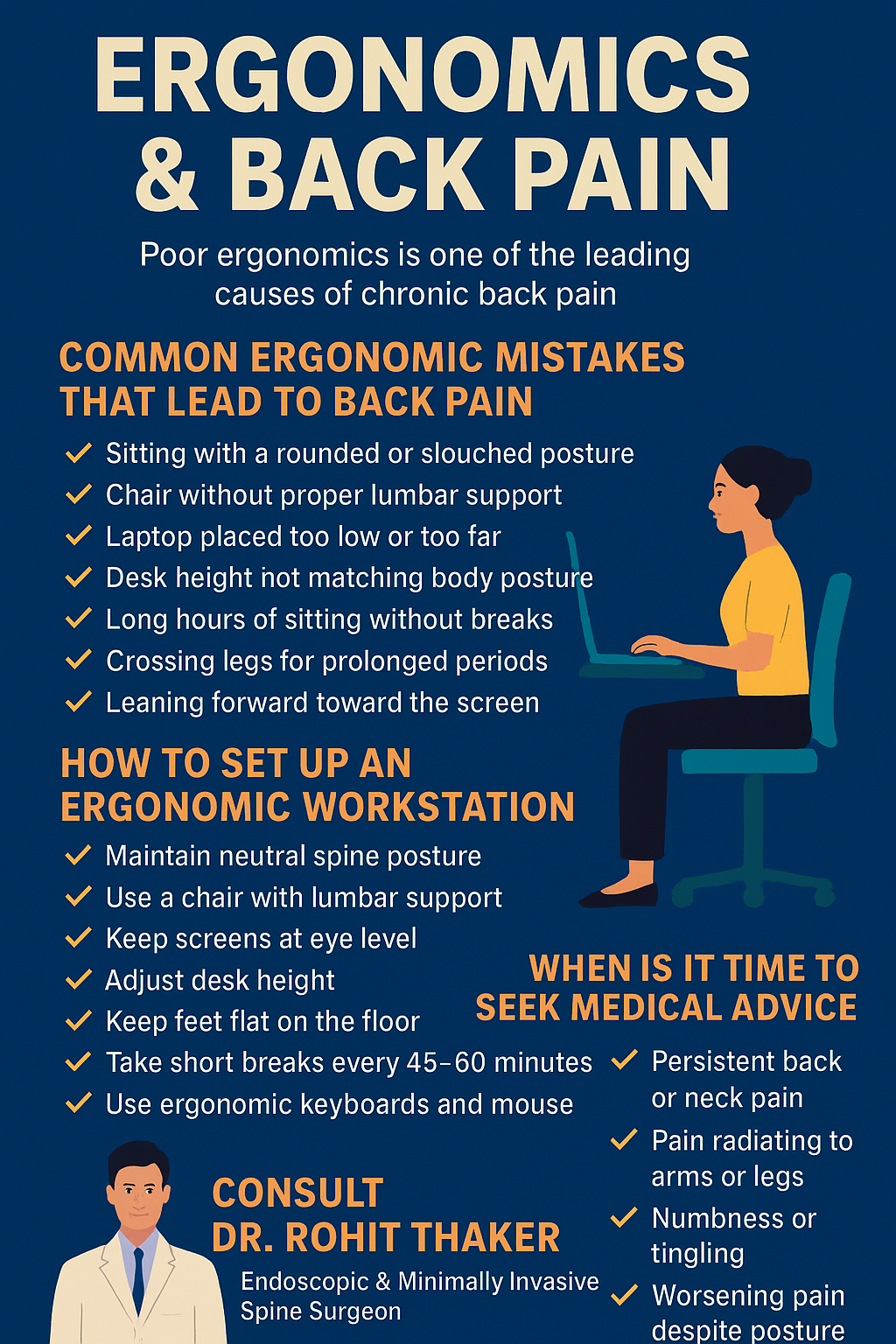
Back pain has become one of the most common health problems in today’s digital and desk-bound lifestyle. While many people assume it comes from ageing, injuries, or underlying spine conditions, a large percentage of back pain actually develops from poor ergonomics — the way we sit, stand, work, or use our devices every day.
Understanding ergonomics and making small, consistent adjustments can significantly reduce pain and protect your spine in the long run.
⭐ What Is Ergonomics?
Ergonomics is the science of designing your environment, workspace, and daily activities to reduce strain on your body — especially your spine, muscles, and joints. Good ergonomics ensures that your posture stays natural, balanced, and stress-free.
When ergonomics are ignored, it leads to:
Muscle fatigue
Increased pressure on spinal discs
Neck, shoulder, and low-back pain
Long-term degeneration of spine structures
How Poor Ergonomics Causes Back Pain
Poor posture and repetitive strain trigger a cycle of tension and imbalance in the spine. Some common ergonomic mistakes include:
1. Slouching at the Desk
This pushes the spine out of alignment and increases pressure on the lower back discs.
2. Forward Head Posture (Text Neck)
Every inch the head moves forward adds additional load on the cervical spine. Constant mobile use intensifies this.
3. Incorrect Chair Height
A chair that’s too high or low affects pelvic alignment, leading to hip and lower-back strain.
4. Working Long Hours Without Movement
Prolonged sitting reduces spinal nutrition (disc hydration) and weakens the core muscles that support your spine.
5. Lifting with a Rounded Back
Improper lifting techniques can cause acute injuries such as disc herniations or muscle tears.
Ergonomic Habits That Protect Your Spine
Here are evidence-based and surgeon-recommended ergonomic practices to keep your spine healthy.
✔ Maintain the “90-90-90” Sitting Rule
Hips at 90°
Knees at 90°
Elbows at 90°
Feet should be flat on the floor, and the back should be supported by the chair’s lumbar curve.
✔ Keep the Screen at Eye Level
This prevents neck bending and reduces strain on cervical muscles.
✔ Use an Ergonomic Chair
A good chair should provide:
Proper lumbar support
Adjustable seat height
Adequate cushioning
Armrests that align with the desk height
✔ Take a Break Every 30–40 Minutes
Short mobility breaks:
Improve blood flow
Reduce muscle tightness
Prevent disc compression
Simple movements like standing, stretching, or walking for 2 minutes are enough.
✔ Follow the Correct Lifting Technique
Bend at the hips and knees
Keep objects close to your body
Avoid twisting while lifting
Engage core muscles
✔ Use Your Phone at Eye Level
Prevents “text neck” and reduces continuous load on cervical spine.
✔ Consider Ergonomic Accessories
Standing desk
Lumbar support cushion
Footrest
Monitor riser
Wrist support pad
Benefits of Good Ergonomics
🌟 Reduced back and neck pain
🌟 Improved posture
🌟 Better productivity and focus
🌟 Lower risk of long-term spine degeneration
🌟 Enhanced comfort during work
🌟 Improved breathing and circulation
Even small ergonomic improvements can create a big difference in long-term spinal health.
When Should You Consult a Spine Specialist?
While ergonomic corrections help most people, some symptoms indicate a deeper issue:
Persistent pain for more than 2–3 weeks
Pain radiating to arms or legs
Numbness or tingling
Weakness in limbs
Difficulty standing or walking
Night pain disturbing sleep
If you experience these, it’s important to get evaluated early to prevent complications.
Expert Advice from Dr. Rohit Thaker
Modern lifestyle demands a proactive approach to spine health. As a spine surgeon specializing in minimally invasive and comprehensive spine care, I strongly believe:
👉 “A healthy spine depends on your daily habits. Ergonomics is one of the simplest yet most powerful tools to prevent back pain.”
Making ergonomic corrections today can save you from long-term spine issues tomorrow.
Conclusion
Ergonomics is not just about comfort — it’s about protecting the spine that supports your entire body. With proper posture, the right workspace setup, and mindful movement, you can significantly reduce back pain and enhance your overall well-being.
If you’re struggling with chronic back or neck pain despite lifestyle corrections, seeking professional guidance is the next best step.
For consultations, spine evaluation, and personalized treatment, connect with Dr. Rohit Thaker.