360° Spine Care | Dr. Rohit Thaker | Best Spine Surgeon Ahmedabad
IT Neck (Tech Neck): Causes, Symptoms, Prevention & When to Consult a Spine Specialist
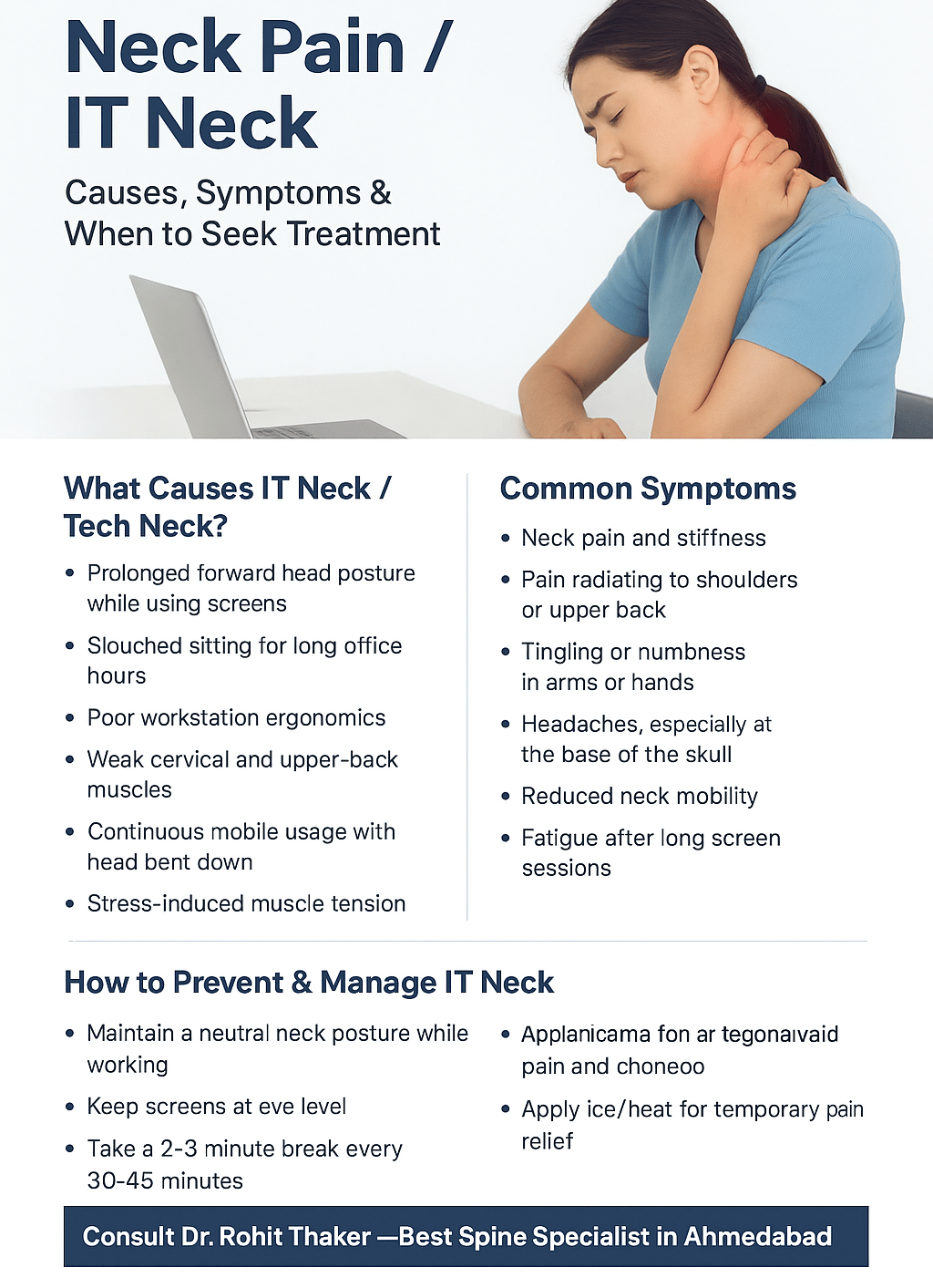
In today’s digital era, neck pain has become one of the most common health concerns among professionals, students, and individuals who spend long hours on phones, laptops, and computers. This condition is widely known as IT Neck or Tech Neck, and it develops due to prolonged screen time and poor posture habits.
Dr. Rohit Thaker
12/1/20252 min read
Ignoring early symptoms of Tech Neck can lead to chronic cervical pain, muscle stiffness, nerve compression, and long-term spine problems. Understanding its causes, symptoms, and preventive measures is essential for maintaining a healthy cervical spine.
What Is IT Neck / Tech Neck?
Tech Neck refers to strain and discomfort in the neck and upper back region caused by bending the head forward while using digital devices. When the head tilts even slightly, the load on the cervical spine increases significantly, leading to muscle tension and disc stress.
This condition is especially common among office workers, IT professionals, gamers, and anyone who uses handheld devices for long periods.
Common Causes of IT Neck
Several daily habits contribute to the development of Tech Neck:
1. Forward Head Posture
Constantly bending the head down to look at phones or laptops increases pressure on the neck muscles and cervical discs.
2. Long Working Hours
Sitting for extended periods without movement leads to stiffness, muscle fatigue, and improper spine alignment.
3. Poor Workstation Ergonomics
Incorrect desk height, low screen position, and uncomfortable chairs cause slouching and strain on the neck.
4. Weak Cervical & Upper-Back Muscles
Poor muscle support makes it harder to maintain proper posture.
5. Excessive Mobile Usage
Texting or scrolling with the head bent down promotes long-term posture imbalance.
6. Stress-Induced Muscle Tightness
Stress can intensify muscle tension, worsening neck pain.
Symptoms of IT Neck You Should Not Ignore
Tech Neck symptoms can range from mild discomfort to severe pain affecting daily life. Common signs include:
Constant neck pain or stiffness
Pain radiating to shoulders or upper back
Tingling or numbness in arms or hands
Headaches, especially from the back of the head
Reduced neck movement
Fatigue after long screen hours
Difficulty maintaining posture
If symptoms persist, they may indicate cervical disc bulge, nerve compression, or early degenerative spine changes.
How to Prevent & Manage IT Neck
A few lifestyle adjustments can significantly reduce neck strain:
1. Maintain Neutral Posture
Keep your neck aligned with your spine instead of leaning forward.
2. Keep Screens at Eye Level
Raise your laptop or monitor to prevent bending your head downward.
3. Take Frequent Breaks
Take a 2–3 minute break every 30–45 minutes to stretch and relax your neck muscles.
4. Perform Cervical Exercises
Simple stretches and strengthening exercises can improve posture and reduce muscle fatigue.
5. Improve Your Ergonomic Setup
Use supportive chairs, correct desk height, and proper lighting.
6. Use Heat/Ice Therapy
Applying hot or cold compresses can help reduce pain and muscle tightness.
7. Reduce Prolonged Mobile Usage
Avoid looking down at your phone for long periods; hold it at chest or eye level.
When Should You Consult a Spine Specialist?
Seek medical attention if you experience:
Persistent neck pain for more than a few days
Pain radiating to arms or shoulder blades
Numbness, tingling, or weakness in hands
Difficulty turning your neck
Headaches that interfere with daily activities
Discomfort affecting sleep or productivity
Early diagnosis can prevent complications such as cervical disc prolapse or nerve compression.
👨⚕️ Consult Dr. Rohit Thaker – Best Spine Specialist in Ahmedabad, Gujarat
Dr. Rohit Thaker, Consultant Endoscopic & Minimally Invasive Spine Surgeon, is a leading expert in treating cervical spine problems, including IT Neck, radiculopathy, cervical disc issues, and posture-related pain.
He provides:
✅ Accurate diagnosis with advanced imaging
✅ Conservative treatment & physiotherapy planning
✅ Minimally invasive procedures for faster recovery
✅ Posture correction & ergonomic guidance
✅ Long-term spine health strategies
His patient-centric approach ensures safe, effective, and result-oriented treatment for neck problems.
📞 Book Your Consultation Today
If you’re experiencing persistent neck pain or symptoms of Tech Neck, don’t ignore them. Early intervention can prevent long-term complications.
Your cervical spine health is in expert, trusted hands with Dr. Rohit Thaker.