Is an Uneven Shoulder a Sign of Scoliosis?
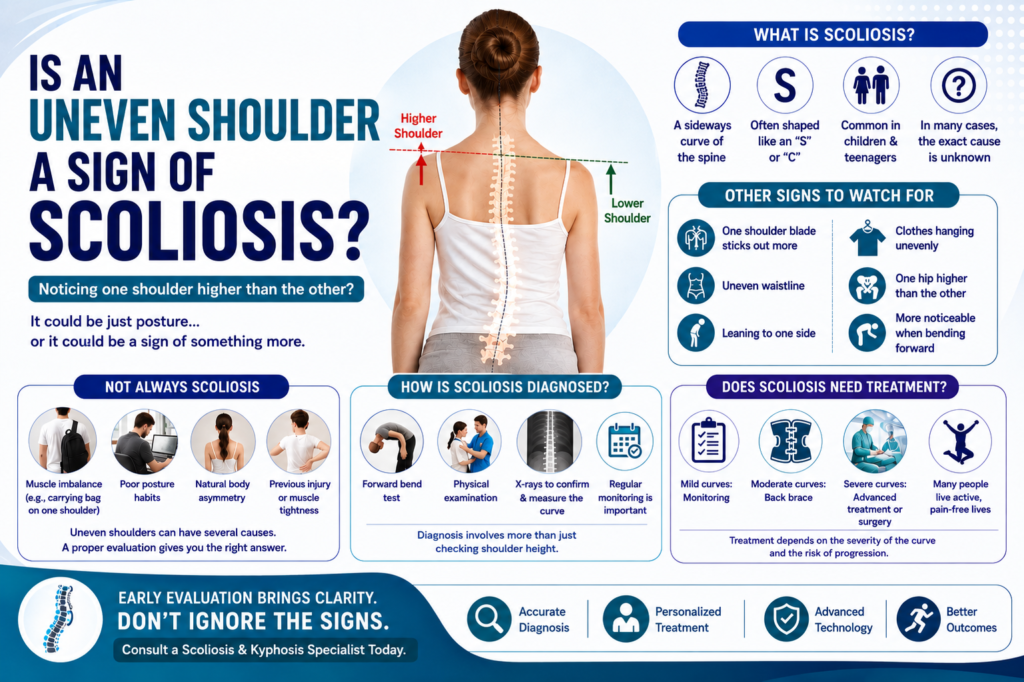
Noticing that one shoulder sits a little higher than the other, whether it’s your own or your child’s, can understandably make you pause. Is it just how the body naturally sits, or could it be a sign of something like scoliosis? Let’s walk through what uneven shoulders can actually mean and when it’s worth taking a closer look.
What Is Scoliosis, in Simple Terms?
Scoliosis is a sideways curve in the spine, rather than the spine running in a straight line down the back.
- It’s often shaped like a gentle “S” or “C” when viewed from behind
- It can range from very mild, barely noticeable, to more pronounced curves
- It commonly develops during childhood or the early teenage growth spurt, though it can appear at other ages too
- In many cases, the exact cause isn’t known, which doctors refer to as idiopathic, simply meaning “without a clear identified cause.”
Can Uneven Shoulders Really Be a Sign of Scoliosis?
Yes, uneven shoulders are one of the more common visible signs associated with scoliosis, though they’re not the only possible explanation.
- A spinal curve can shift the position of the shoulder blades, making one appear higher than the other
- It may also cause one side of the ribcage to appear more prominent than the other
- The unevenness is often more noticeable when bending forward, since this position can make a spinal curve more visible
- Even a mild curve can sometimes create a noticeable difference in shoulder height
What Other Signs Might Point to Scoliosis?
Uneven shoulders rarely show up completely on their own, so it helps to look at the fuller picture.
- One shoulder blade sticking out more than the other
- Uneven waistline, where one side appears higher or has a more pronounced curve
- Leaning slightly to one side when standing
- Clothes hanging unevenly, even when they fit properly
- One hip appearing higher than the other
Looking for a combination of these signs, rather than just one, gives a clearer picture of whether scoliosis might be involved.
Could Uneven Shoulders Be Caused by Something Other Than Scoliosis?
Yes, and this is worth keeping in mind before jumping to conclusions.
- Muscle imbalance from repetitive activities, like carrying a bag on one shoulder consistently, can cause temporary unevenness
- Posture habits, especially in people who spend long hours at a desk, can create the appearance of uneven shoulders
- Minor differences in shoulder height are actually quite common and don’t always indicate a spinal issue
- Previous injuries or muscle tightness on one side of the body can also contribute to this appearance
Since several things can cause uneven shoulders, a proper evaluation is the only reliable way to know what’s actually behind it.
How Is Scoliosis Actually Diagnosed?
Diagnosis involves more than just visually checking shoulder height.
- The forward bend test, where a person bends forward at the waist, is a simple screening method that can reveal spinal curves more clearly
- A physical examination checks posture, shoulder and hip alignment, and spinal curvature
- X-rays are typically used to confirm the diagnosis and measure the exact degree of the curve
- Regular monitoring, especially in growing children, helps track whether a mild curve is stable or progressing over time
Does Scoliosis Always Need Treatment?
Not necessarily, treatment depends heavily on the severity of the curve and whether it’s likely to progress.
- Mild curves are often simply monitored with periodic check-ups, especially in children who are still growing
- Moderate curves may be managed with a back brace to help prevent further progression during growth
- More significant curves, particularly those affecting posture, breathing, or causing ongoing pain, may require more focused treatment, including surgery in select cases
- Many people with mild scoliosis live full, active lives without ever needing surgical treatment
Is Scoliosis Only a Concern for Children?
No, though it’s more commonly identified during childhood and adolescent growth spurts.
- Some cases go unnoticed until adulthood, especially if the curve was very mild
- Degenerative scoliosis can also develop later in life due to age-related changes in the spine
- Adults may notice uneven shoulders or posture changes gradually, rather than the more sudden appearance often seen during growth spurts in children
When Should I See a Specialist About Uneven Shoulders?
While mild shoulder unevenness is often harmless, certain signs are worth having properly evaluated.
- Uneven shoulders combined with other signs, like an uneven waistline or visible spinal curve
- Noticeable changes in posture or shoulder height over a relatively short period
- Back pain accompanying the visible unevenness
- Any concerns during a child’s growth spurt, since early evaluation allows for better monitoring
Where Can I Get a Proper Evaluation?
If you’re noticing uneven shoulders in yourself or your child, getting an accurate diagnosis brings real clarity. Consulting a scoliosis & kyphosis specialist in Ahmedabad ensures a thorough evaluation, including proper imaging if needed, so you know exactly what’s going on and whether any treatment or monitoring is necessary.
The Bottom Line
Uneven shoulders can be a sign of scoliosis, but they can also stem from posture habits or minor muscle imbalances that aren’t cause for concern. The best way to know for certain is a proper evaluation, especially if the unevenness appears alongside other signs like an uneven waistline or visible spinal curve.
For personalized guidance on evaluating uneven shoulders or a suspected spinal curve, consulting an experienced specialist like Dr. Rohit Thaker can help bring clarity and peace of mind.