Expert Spinal Tuberculosis Treatment by Dr. Rohit A. Thaker
Spinal Tuberculosis Specialist in Ahmedabad
Spinal tuberculosis, also known as Pott’s disease or tuberculous spondylitis, is one of the most serious forms of extra-pulmonary TB. If left untreated, it can lead to vertebral collapse, spinal deformity, and even permanent paralysis. Dr. Rohit A. Thaker, a leading spinal tuberculosis specialist in Ahmedabad, offers accurate diagnosis, medical management, and advanced surgical reconstruction at Spine 360. With fellowship training from Germany, Japan, and Israel, Dr. Thaker treats both early-stage TB spine and complex cases involving deformity, abscess, or neurological deficit.

What Is Spinal Tuberculosis?
Spinal tuberculosis is a chronic bacterial infection of the spine caused by Mycobacterium tuberculosis. It accounts for nearly 50 percent of all skeletal TB cases and most commonly involves the thoracolumbar region. The infection usually spreads to the spine through the bloodstream from a primary site in the lungs or lymph nodes, slowly destroying the vertebral body, disc space, and surrounding soft tissues.
Why early diagnosis matters: TB spine progresses silently for weeks or months before pain becomes severe. By the time a deformity or weakness appears, significant bone destruction has often already occurred. Early detection through MRI and timely Anti-Tubercular Therapy (ATT) can prevent permanent damage.

Common Causes of Sciatica
The most frequent cause is lumbar disc herniation, where the soft nucleus pulposus pushes through a torn annulus fibrosus and presses on a nerve root. Other causes include spinal stenosis, spondylolisthesis, degenerative disc disease, foraminal stenosis, and piriformis syndrome. Rarely, spinal infections or tumours may also produce sciatic-type pain.
Symptoms You Should Not Ignore
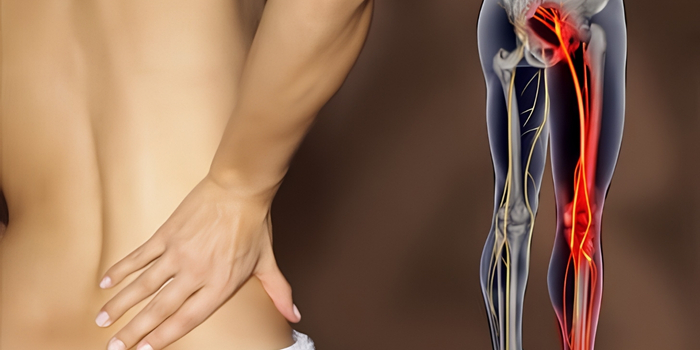
Patients usually describe burning, stabbing, or electric-shock-like pain radiating from the lower back to the leg. Other symptoms include numbness, tingling (paresthesia), muscle weakness, and foot drop. Loss of bladder or bowel control is a red-flag sign of cauda equina syndrome and needs emergency care.
Spinal Tuberculosis Treatment in Ahmedabad
At Spine 360, spinal tuberculosis treatment in Ahmedabad is structured around two principles — completely eliminating the TB infection with medication, and preserving or restoring the structural integrity of the spine. Treatment is divided into clearly defined phases for the best long-term outcome.

Confirming the Diagnosis
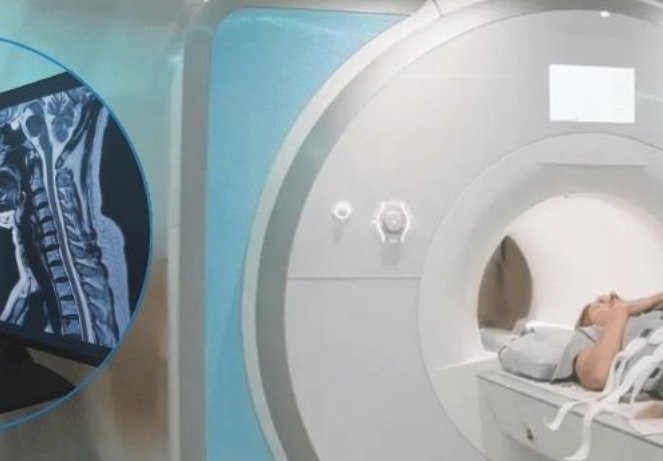
Diagnosis is established through clinical evaluation supported by MRI of the spine (the most sensitive imaging tool), CT scan, ESR, CRP, Mantoux test, CBNAAT (GeneXpert MTB/RIF), and where required, CT-guided biopsy for histopathology and culture sensitivity. Drug resistance testing is now routine to identify MDR-TB early.

Anti-Tubercular Therapy (ATT)
The cornerstone of treatment is a multi-drug regimen following standard protocols — Isoniazid, Rifampicin, Pyrazinamide, and Ethambutol in the intensive phase, followed by a continuation phase. Total duration usually ranges from 9 to 18 months depending on disease severity and response. Liver function monitoring is essential throughout.
Bracing and Supportive Care
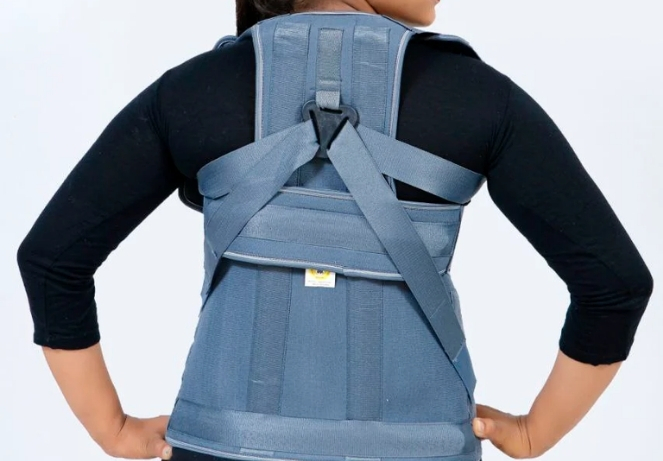
A spinal brace such as a Taylor’s brace or CTLSO is used to protect the affected segment, reduce pain, and prevent further collapse during the healing phase. Nutritional support, calcium, vitamin D, and graded physiotherapy are added to strengthen the body and spine.
Surgical Intervention (When Indicated)
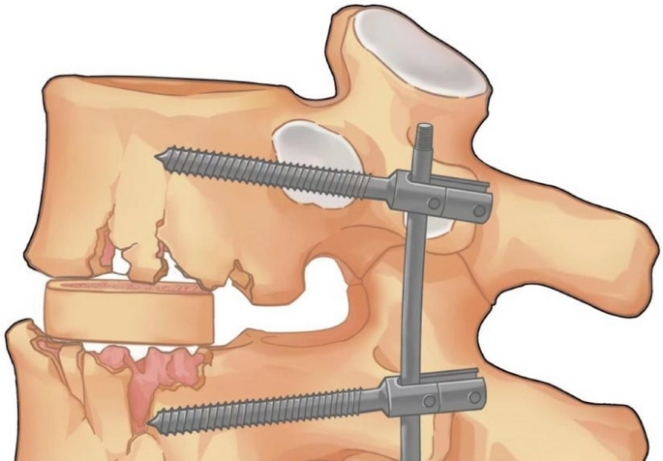
Surgery is reserved for cases with neurological deficit, significant kyphotic deformity, large abscess, instability, or failure of medical therapy. Procedures performed by Dr. Thaker include anterior debridement and decompression, posterior instrumentation with pedicle screw fixation, kyphus correction surgery, minimally invasive drainage of cold abscesses, and spinal reconstruction with bone grafting or cages where vertebral bodies are destroyed.
Recovery and Long-Term Follow-up
Regular monitoring with clinical assessment, ESR/CRP, and follow-up MRI ensures complete resolution of infection. Physiotherapy, posture training, and gradual return to normal activity are guided over several months.
Stages of Spinal Tuberculosis
Spinal TB progresses through clearly defined stages, and treatment depends entirely on which stage the patient presents in.
Predestructive Stage
The infection has just begun. Patients have mild back pain and muscle spasm. MRI shows early marrow oedema, but vertebral structure is still intact. Excellent prognosis with medical management alone.
Early Destructive Stage
Vertebral body and disc space start showing erosion. Back pain becomes constant and localised. A paraspinal abscess may begin to form. Medical therapy with bracing usually controls the disease.
Mild Angular Kyphosis
Two or more vertebrae collapse, producing a forward angulation of the spine (gibbus deformity) of less than 30 degrees. Medical management continues, but close follow-up is essential to monitor deformity progression.
Moderate to Severe Kyphosis
Spinal angulation exceeds 30 degrees with extensive vertebral destruction. Surgery is often needed for deformity correction, decompression, and stabilisation.
Neurological Deficit (Pott's Paraplegia)
The most severe stage. Pressure from the abscess, sequestrum, or collapsed bone compresses the spinal cord, causing lower limb weakness, sensory loss, and bladder or bowel dysfunction. Emergency surgical decompression with ATT is required.
Symptoms and Warning Signs
The symptoms of TB spine are subtle in the beginning, which is why patients often delay consultation. Recognising the early signs makes a significant difference in outcome.
Common symptoms include:
- Persistent back pain lasting more than 4–6 weeks, often worse at night
- Low-grade evening fever with night sweats
- Unexplained weight loss, fatigue, and loss of appetite
- Stiffness, muscle spasm, and reduced spine mobility
- Visible bony prominence or hump (gibbus deformity)
- Cold abscess — a painless soft swelling in the back, groin, or thigh
- Numbness, tingling, or weakness in the legs
- Loss of bladder or bowel control in advanced cases
⚠ Red-flag warning: Any combination of chronic back pain, low-grade fever, weight loss, and night sweats — especially in patients with past TB exposure — should prompt immediate spine evaluation. These four symptoms together are highly suggestive of spinal tuberculosis.

Why Choose Dr. Rohit Thaker for Spinal Tuberculosis Care
Spinal TB demands a surgeon who understands both the medical management of infection and the structural reconstruction of the spine — two very different skill sets. Dr. Rohit A. Thaker brings both together at Spine 360.
Specialist in TB Spine Reconstruction
extensive experience in managing Pott's disease, kyphus correction, and Pott's paraplegia
DNB Orthopaedics with International Spine Fellowships
in Germany, Japan, and Israel
Minimally invasive expertise
for abscess drainage, biopsy, and decompression where possible
Coordinated medical care
with pulmonologists and infectious disease specialists for complete ATT supervision
Long-term follow-up
to detect recurrence, drug resistance, or late-onset deformity
Honest treatment philosophy
surgery is recommended only when medication and bracing cannot achieve the goal
Frequently Asked Questions
Is spinal tuberculosis contagious?
Spinal TB itself is not contagious because the infection is inside the bone. However, if the patient also has active pulmonary TB, that respiratory infection can spread to others until treatment is started.
Can spinal tuberculosis be cured completely?
Yes. With timely diagnosis and a complete course of Anti-Tubercular Therapy lasting 9 to 18 months, most patients achieve full recovery. Surgery may be needed in advanced cases but the disease is curable.
How is spinal TB diagnosed?
Diagnosis is made through MRI of the spine, blood tests (ESR, CRP), Mantoux test, GeneXpert (CBNAAT), and confirmed by CT-guided biopsy where required. MRI is the most sensitive test to detect early TB spine.
Why does spinal TB cause a hunchback?
When the infection destroys the front part of the vertebrae, the spine collapses forward and produces an angular deformity known as gibbus or kyphosis. Early treatment can prevent this complication.
What is Pott's paraplegia?
Pott’s paraplegia is a serious complication where the abscess, dead bone, or collapsed vertebra presses against the spinal cord, causing weakness or paralysis of the legs. It needs urgent surgical decompression.
Is surgery always required for spinal TB?
No. The majority of patients improve completely with Anti-Tubercular Therapy and bracing alone. Surgery is needed only in cases with neurological weakness, severe deformity, instability, large abscess, or no response to medication.
How long does spinal TB treatment take?
A standard Anti-Tubercular Therapy course lasts between 9 and 18 months. The exact duration is decided based on disease severity, drug response, and resolution on follow-up imaging.
Can spinal tuberculosis come back after treatment?
Recurrence is uncommon when the full ATT course is completed without interruption. Stopping medication early, drug resistance, or low immunity (HIV, diabetes, malnutrition) can lead to relapse and need close follow-up.

Spine Specialist & Back Pain Expert
Clinic hours: Monday to Saturday | Emergency spine care available.