Expert Sciatica Treatment by Dr. Rohit A. Thaker
Back Pain Treatment in Ahmedabad
Back pain is the most common reason patients walk into a spine clinic. Honestly, somewhere between 80 to 90 percent of adults will deal with back pain at some point, most for a few weeks, some for years, and a small group for what feels like forever. The good news is that the vast majority of back pain is treatable, often without surgery, when handled properly. Dr. Rohit A. Thaker at Spine 360 offers structured back pain treatment in Ahmedabad, built around finding the actual cause, not just throwing painkillers at the symptom. International fellowship training in Germany, Japan, and Israel backs every diagnostic and treatment decision made here.

Common Types of Back Pain — And What They Usually Mean
Back pain isn’t one disease. It is more like a category that contains a dozen different conditions, each behaving differently.

Acute mechanical back pain
The most common. Comes on suddenly, usually after lifting something, twisting awkwardly, sneezing too hard, or just getting up off a low sofa. The pain is sharp, the back feels locked, and movement is restricted.

Chronic mechanical back pain
The long-standing variety. Comes and goes, gets worse with sitting or standing for long periods, eases with movement. Often linked to poor posture, weak core, sedentary work, and gradual disc degeneration.

Discogenic back pain
Comes specifically from a damaged disc. Usually a dull, deep ache in the centre of the lower back that gets worse with bending forward, prolonged sitting, or coughing. Disc-related pain can also radiate down a leg if a nerve is pinched.

Facetogenic back pain
From the small joints at the back of the spine. Pain that worsens with bending backward, twisting, or standing for long periods, classic facet joint pattern. Often missed because patients and even doctors focus too much on discs.
Sacroiliac joint pain
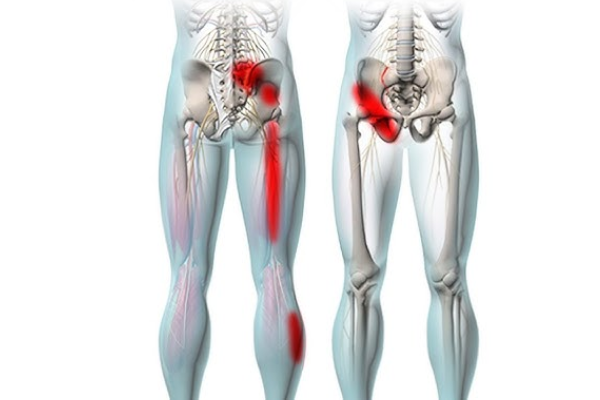
Sits low, buttock area, often one-sided. Frequently misdiagnosed as disc disease. A specific examination can usually identify it, and a single targeted injection often confirms and treats it.

Inflammatory back pain
Different in character. Stiffness in the morning that takes 30 minutes or more to ease, improvement with exercise, worsening with rest. This pattern points toward conditions like ankylosing spondylitis and needs rheumatology evaluation alongside spine care.

Radicular back pain
Back pain with nerve involvement. Pain radiates into the leg or arm, often with numbness, tingling,
or weakness. The pain is usually worse in the limb than in the back itself. Sciatica is the classic example.

Red-flag back pain
The dangerous variety. Back pain with fever, weight loss, night pain, history of cancer, recent trauma, neurological deficit, or bladder/bowel problems. This needs urgent investigation, not “wait and watch.”
When Back Pain Needs Urgent Medical Attention
Most back pain is annoying but harmless. Some kinds are not. Knowing the difference saves time and prevents disasters.
Loss of bladder or bowel control along with back pain is a true emergency. This may suggest cauda equina syndrome, where the cluster of nerves at the bottom of the spinal cord is compressed. It needs surgical decompression within 24 to 48 hours to prevent permanent damage. Don’t wait it out.
For everything else, a non-urgent specialist consultation is still smart if pain lasts more than 4 to 6 weeks despite basic care.

Back pain with fever or unexplained weight loss, pain that wakes you from sleep, pain after a fall or road accident, sudden weakness in the legs, numbness in the saddle area (inner thighs/groin), loss of bladder or bowel control, back pain in a patient with a history of cancer, or pain that has progressively worsened over weeks despite rest and medication.
Idle Approach Of Back Pain Treatment
Step:1
First-line conservative care
Most patients start here. This includes medication for pain and inflammation (NSAIDs, muscle relaxants), short-term rest balanced with gentle activity, heat or ice as needed, postural correction, and a simple home exercise plan. Most acute back pain settles within 2 to 4 weeks at this stage.
Step:3
Image-guided pain procedures
For pain that hasn't responded to medication and physiotherapy, or for severe pain that is preventing rehabilitation, targeted injections are highly effective. Epidural steroid injections, facet joint blocks, sacroiliac joint injections, transforaminal nerve root blocks, radiofrequency ablation for chronic facetogenic pain. Done under live fluoroscopy, day-care procedure, often weeks to months of relief.
Step:2
Structured physiotherapy
For pain that doesn't settle in a few weeks, supervised physiotherapy makes a big difference. Targeted exercises for core strength, hip mobility, and posture correction. McKenzie protocol for disc-related pain. Modalities like ultrasound and TENS for symptom relief during the active phase. Most patients see meaningful improvement in 4 to 8 weeks.
Step:4
Surgical intervention
Reserved for specific cases — significant disc herniation with nerve compression, severe spinal stenosis with walking limitation, instability, fractures, infections, tumors, or progressive neurological deficit. When surgery is needed, modern techniques are used: endoscopic discectomy, microdiscectomy, minimally invasive fusion, decompression, cervical disc replacement where appropriate. Most patients walk within 24 hours and return to office work in 4 to 8 weeks.
Everyday Habits That Make Back Pain Better Or Worse
Beyond clinical treatment, daily habits matter more than any patient realises.
- Walking at least 30 minutes daily
- Sleeping on a medium-firm mattress with proper pillow support
- Drinking enough water (discs are 80% water)
- Maintaining a healthy weight
- Core exercises 3 times a week
- Breaks every 30 to 45 minutes when sitting
- Lifting with bent knees, not a curved back
- Keeping the wallet out of the back pocket while driving
- Long flights without standing up
- Soft sagging sofas
- Lying flat on the stomach to read or work
- Sleeping on a sagging mattress
- Slouching while scrolling on the phone
- Working with a laptop on the lap for hours
- Lifting children one-handed off the floor
- Ignoring early warning twinges and pushing through them
When Surgery Becomes Necessary For Back Pain Treatment?
Surgery is the last step, not the first. But there are clear situations where surgery is not only justified, it is necessary.
When a disc herniation is large and pressing on a nerve enough to cause leg pain that doesn’t settle, leg weakness, or numbness, microdiscectomy or endoscopic discectomy can be life-changing. When spinal stenosis has reached a point where walking even short distances triggers leg pain (neurogenic claudication), decompression surgery restores walking distance dramatically. When there is instability or spondylolisthesis that is causing both back pain and nerve symptoms, fusion may be the right call. When fractures, tumors, or infections affect the spine, surgery is often part of treatment. When there is progressive neurological deficit increasing weakness, foot drop, hand clumsiness, bladder/bowel issues, surgery should not be delayed.
Equally importantly, when none of these apply and the pain is mechanical, postural, or muscular, surgery will not help. We say so when that is the case. Operating on back pain that does not have a clear structural cause is one of the biggest reasons spine surgery has a mixed reputation in many parts of the world.
Why Patients Choose Dr. Rohit Thaker for Back Pain Treatment
Back pain has hundreds of treatment options. The hard part is choosing the right one for the right patient and that is what experience actually means.
International spine training across three countries
Germany, Japan, Israel. Each focused on a different aspect of spine care. The breadth shapes how complex back pain cases are diagnosed and managed.
Non-surgical first, always
Most patients walk in expecting surgery and leave with a non-surgical plan. Surgery is recommended only when there is a clear indication and a clear benefit.
Full range of pain procedures in-house
Fluoroscopy-guided injections, nerve root blocks, radiofrequency ablation, vertebroplasty — done at the same clinic, by the same team that handles the surgery if needed.
Modern surgical techniques
When surgery is genuinely needed, endoscopic, minimally invasive, or microsurgical methods are used — significantly reducing recovery time and pain compared to traditional open spine surgery.
Honest second opinions welcome
Many patients arrive after being told they need urgent fusion elsewhere. In a fair number of cases, they don't — and a clear explanation of why often settles weeks of anxiety.

Frequently Asked Questions
How long does normal back pain take to settle?
Most acute back pain settles within 2 to 4 weeks with rest, medication, and basic care. Chronic back pain takes longer and
usually needs structured treatment.
Is bed rest good for back pain?
A day or two of relative rest is fine. Longer than that is harmful — it weakens the back muscles and slows recovery. Gentle
movement is better than complete rest.
Do I need an MRI for back pain?
Not for most patients. MRI is needed when pain lasts beyond 4 to 6 weeks, when red-flag symptoms are present, or before
any procedure or surgery.
Can I exercise with back pain?
Yes, gentle walking and basic mobility exercises help. Heavy lifting, twisting, and intense gym work should be avoided until
pain settles.
Will my back pain come back?
It can — especially without core strengthening and posture correction. Patients who do regular exercises have a much lower
recurrence rate.
Is a hard mattress better for back pain?
No. A medium-firm mattress works best for most people. Too hard or too soft can both worsen back pain.
Can stress cause back pain?
Yes, stress increases muscle tension and lowers pain tolerance. It often makes existing back pain feel much worse.
When should I see a back pain specialist in Ahmedabad?
If pain lasts more than 4 to 6 weeks, radiates to a leg or arm, or comes with weakness, numbness, fever, or bladder/bowel
issues — see a specialist soon.

Spine Specialist & Back Pain Expert
Clinic hours: Monday to Saturday | Emergency spine care available.