PRECISION. SAFETY. FASTER RECOVERY
Full Endoscopic Minimally Invasive Spine Surgery
Endoscopic minimally invasive spine surgery represents the most advanced and least invasive approach currently available in modern spine surgery. Unlike conventional open surgery or even standard minimally invasive techniques, full endoscopic procedures use a working channel endoscope, typically 7 to 10 mm in diameter, through which the surgeon visualises, irrigates, and operates on the spine simultaneously, all through a single small incision.
At Spine 360, Dr. Rohit Thaker, a spine surgeon with dedicated fellowship training in Germany, Japan, and Israel, performs full endoscopic invasive spine surgery for a range of conditions including lumbar disc herniation, spinal stenosis, foraminal stenosis, and cervical disc disease. His training at internationally recognised centres of endoscopic spine surgery allows him to offer techniques that are not yet widely available across India.
Full Endoscopic Minimally Invasive Spine Surgery in Ahmedabad - Understanding the Procedure
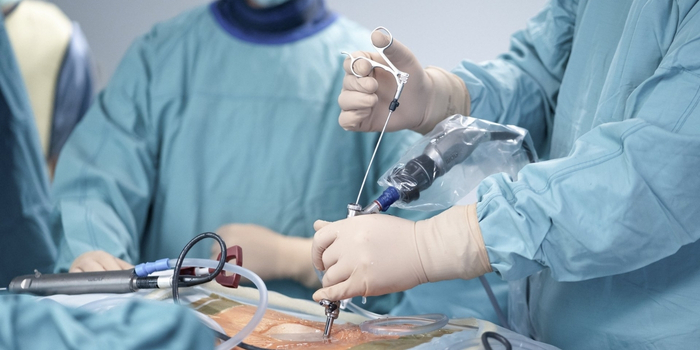
Endoscopic minimally invasive spine surgery is performed using a rigid, high-definition endoscope inserted through a working cannula. The endoscope integrates a camera, light source, and an irrigation channel within a single instrument. The surgeon operates through the working channel using specially designed tools, all under continuous saline irrigation that maintains a clear operative field and reduces bleeding.
This is fundamentally different from:
- Micro Endoscopic Discectomy (MED) — which uses a tubular retractor and external camera without true endoscopic integration
- Open laminectomy or discectomy — which requires wide muscle retraction and bone removal
- Conventional MIS techniques — which are less invasive than open surgery but still involve larger incisions and more tissue disruption than full endoscopy
The two main approaches used in full endoscopic invasive spine surgery are:

Transforaminal Endoscopic Approach (TESSYS / TF-PELD)
The endoscope is introduced through the natural opening in the spine called the foramen. This allows the surgeon to reach the disc space and decompress the nerve root without removing any bone. It is particularly suited for lateral and foraminal disc herniations and can be performed under local anaesthesia with sedation in selected cases.
Interlaminar Endoscopic Approach (IL-PELD / BESS)
The endoscope is introduced between the laminae, the posterior bony arch of the vertebra. This approach provides excellent access to central and paracentral herniations and is the preferred route for decompression in lumbar spinal stenosis. The Biportal Endoscopic Spine Surgery (BESS) variant uses two small portals for even greater flexibility and visualisation.
Full Endoscopic Minimally Invasive Spine Surgery - Conditions Treated
Dr. Rohit Thaker performs full endoscopic procedures for the following spinal conditions:
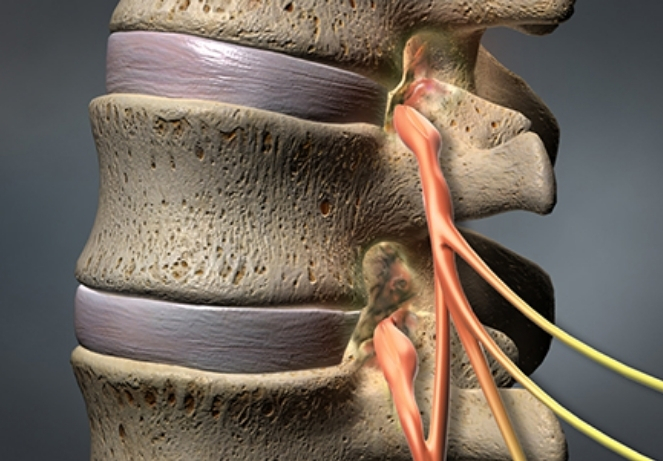
Lumbar Disc Herniation (LDH)
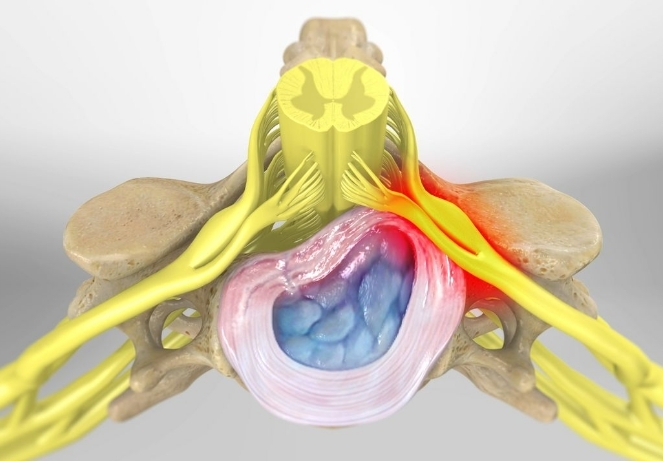
The most common indication. Endoscopic discectomy removes the herniated disc fragment compressing the nerve root, with immediate relief of leg pain (sciatica) in most patients.
Lumbar Spinal Stenosis
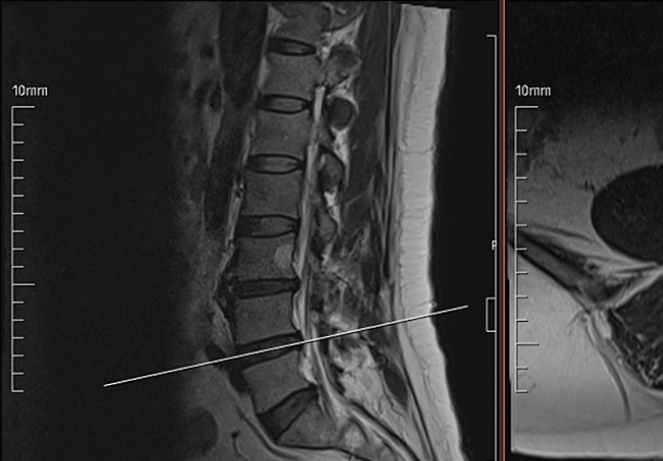
Endoscopic decompression of the narrowed spinal canal through ligament and bone removal, restoring space for the nerves without requiring fusion in most cases.
Foraminal and Far-Lateral Disc Herniation
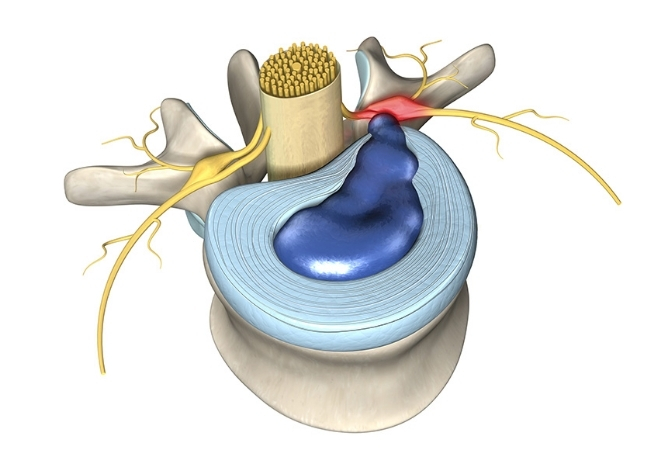
Ideally addressed through the transforaminal endoscopic route, which directly targets the compressed nerve root at the exit point.
Cervical Disc Herniation
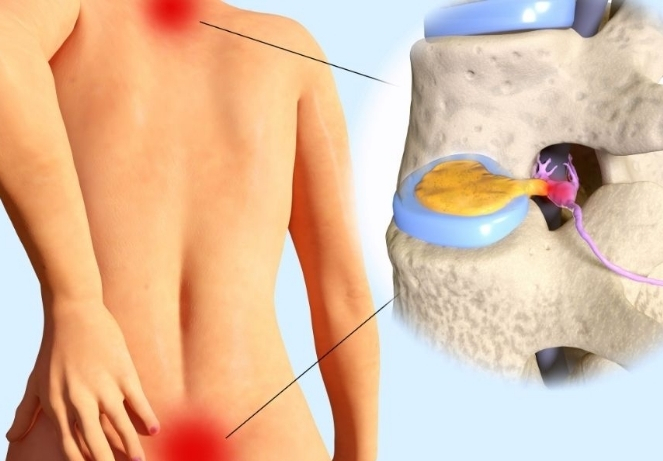
Full endoscopic posterior cervical foraminotomy offers nerve decompression in the neck without the need for fusion, preserving natural cervical motion.
Recurrent Disc Herniation
Re-do endoscopic surgery for disc herniations that have recurred after previous conventional discectomy, with reduced risk due to minimal scar tissue manipulation.
Epidural Fibrosis / Failed Back Surgery Syndrome (FBSS)
Endoscopic lysis of epidural adhesions in selected patients with persistent pain after prior spine surgery.
Full Endoscopic Minimally Invasive Spine Surgery in Ahmedabad - Diagnostic Approach
Careful patient selection and precise preoperative planning are essential for successful endoscopic spine surgery. At Spine 360, the following evaluations are conducted:
Clinical Assessment
A detailed neurological examination documents motor strength, sensory loss, reflex changes, and gait. The pattern and duration of symptoms, response to previous treatment, and functional limitation are all assessed.
MRI (Magnetic Resonance Imaging)
Identifies the exact level, type, and extent of disc herniation or stenosis. Essential for planning the endoscopic approach (transforaminal vs. interlaminar).
CT Scan (Computed Tomography)
Provides bony anatomy detail including facet joint hypertrophy, calcified discs, and canal dimensions. Critical for surgical planning in stenosis cases.
Dynamic X-rays (Flexion-Extension Views)
Assess for segmental instability or listhesis, which may contraindicate isolated endoscopic decompression.
Electromyography (EMG) and Nerve Conduction Studies
Functional studies to confirm nerve involvement and guide level selection when clinical and imaging findings are not concordant.
Why Choose Dr. Rohit Thaker as Your Full Endoscopic Minimally Invasive Spine Surgery in Ahmedabad
Dr. Rohit A. Thaker holds a D.Ortho and DNB in Orthopaedics from Mumbai. His fellowship training specifically included advanced endoscopic spine surgery techniques in Germany, Japan, and Israel — countries at the forefront of this technology. He is among a small group of spine surgeons in Gujarat performing full endoscopic spine procedures routinely. His practice at Spine 360, located at Orthoplus Hospital, Bhuyangdev, Ahmedabad, is guided by:
Technique precision
Fellowship-trained in transforaminal, interlaminar, and biportal endoscopic approaches across multiple surgical centres
Patient-first decision making
Surgery is recommended only when conservative treatment has been given an adequate trial and surgical criteria are met
Preference for nerve preservation
The endoscopic approach allows the surgeon to directly visualise and protect the nerve root throughout decompression
Complete care pathway
From diagnosis through surgery and post-surgical rehabilitation, patients are supported at every stage of their recovery

Frequently Asked Questions
What is full endoscopic invasive spine surgery?
Endoscopic invasive spine surgery is the most minimally invasive form of spine surgery currently available. It uses a single, thin instrument called a working channel endoscope — approximately 7 to 10 mm in diameter — to visualise and treat conditions such as disc herniation and spinal stenosis. The surgeon sees everything through a high-definition camera integrated into the endoscope, and all instruments pass through a single working channel. There is no need to cut muscles or remove large portions of bone.
How is full endoscopic surgery different from standard keyhole spine surgery?
Standard keyhole or minimally invasive spine surgery uses tubular retractors with a separate external camera, resulting in incisions of 2 to 3 cm and some degree of muscle dilation. Full endoscopic surgery uses a true endoscope — similar to those used in laparoscopic abdominal surgery — with everything integrated into one instrument passed through a 7 to 10 mm incision. Muscle trauma is significantly lower, and recovery is faster with full endoscopy.
Is full endoscopic invasive spine surgery safe?
Yes. When performed by a trained endoscopic spine surgeon, full endoscopic procedures are safe and effective. The continuous saline irrigation used during the procedure provides a clear view and reduces the risk of infection. The technique has been performed globally for over two decades and has an established safety record. As with any surgical procedure, risks exist and are discussed during the pre-operative consultation.
Can full endoscopic surgery be done under local anaesthesia?
Yes, in selected cases — particularly the transforaminal approach for lumbar disc herniation. This option is especially valuable for elderly patients or those with medical conditions that increase the risk of general anaesthesia. Dr. Thaker evaluates each patient individually to determine the most appropriate anaesthetic approach.
How soon can I go home after full endoscopic invasive spine surgery?
Most patients are discharged on the same day or the morning after surgery. Patients are typically able to walk within a few hours of the procedure. Compared to open spine surgery, where hospital stays range from 3 to 7 days, the recovery timeline with full endoscopy is substantially shorter.
How long before I can return to work?
Return to work depends on the nature of your job. Patients with desk-based work typically return within 2 to 3 weeks. Those in physically demanding occupations may require 4 to 6 weeks before resuming full duties. A structured physiotherapy programme, beginning within the first week after surgery, accelerates recovery and reduces the risk of recurrence.
Will I need fusion surgery after full endoscopic decompression?
In most cases, no. Full endoscopic decompression is specifically designed to remove the cause of nerve compression — whether a herniated disc or thickened ligament — while preserving the structural integrity of the spine. Because the facet joints and posterior spinal elements are not disrupted, the treated segment usually remains stable without the need for fusion. Fusion is considered only when there is pre-existing spinal instability or listhesis.
Is full endoscopic surgery available for neck (cervical) problems?
Yes. Full endoscopic posterior cervical foraminotomy is performed for cervical disc herniation causing arm pain or weakness. This technique decompresses the nerve root in the neck without requiring a fusion, preserving cervical spine motion. It is a highly effective alternative to Anterior Cervical Discectomy and Fusion (ACDF) in carefully selected patients.
If you have been suffering from back pain, leg pain, arm pain, or neurological symptoms such as numbness or weakness, and have not found relief with conservative treatment, a consultation with a full endoscopic invasive spine surgery in Ahmedabad may help you explore the most advanced, least invasive surgical option currently available.

Spine Specialist & Back Pain Expert
Clinic hours: Monday to Saturday | Emergency spine care available.