Expert Treatment by Dr. Rohit A. Thaker
Cervical & Lumbar Disc Prolapse Specialist in Ahmedabad
A disc prolapse in the neck or lower back can cause severe pain, numbness, weakness, and restricted movement that affects nearly every aspect of daily life. Dr. Rohit A. Thaker, a trusted cervical & lumbar disc prolapse specialist in Ahmedabad, offers precise diagnosis and modern spine care at Spine 360. With fellowship training from Germany, Japan, and Israel, Dr. Thaker manages disc-related problems through non-surgical care, image-guided procedures, and advanced minimally invasive or endoscopic surgery, helping patients return to normal life with minimal downtime.
Understanding Cervical & Lumbar Disc Prolapse
The human spine is made up of vertebrae separated by intervertebral discs that act as shock absorbers. When one of these discs is damaged or displaced, it can press against nearby nerves and cause pain that radiates into the arms or legs.
Lumbar Disc Prolapse
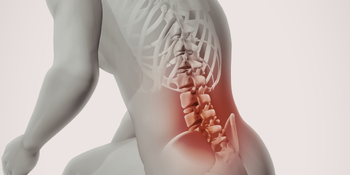
Lumbar disc prolapse affects the lower back discs (L1 to S1), with L4–L5 and L5–S1 being the most commonly involved levels. It typically causes low back pain along with radiating leg pain (sciatica), numbness, and weakness in the affected leg.

What Is a Disc Prolapse?
A disc prolapse, also called a slipped disc or herniated disc, occurs when the soft inner gel of the disc (the nucleus pulposus) pushes through a tear in its outer ring (the annulus fibrosus). This displaced material can compress spinal nerves or even the spinal cord, leading to both localised and radiating symptoms.
Cervical Disc Prolapse
Cervical disc prolapse affects the discs in the neck region (C2 to C7). It commonly produces neck pain along with arm pain (brachialgia), numbness, and tingling in the shoulder, arm, or hand. Severe compression can lead to cervical myelopathy, which causes hand clumsiness, balance problems, and difficulty in walking.
Cervical & Lumbar Disc Prolapse Treatment in Ahmedabad
At Spine 360, treatment is always matched to the severity of the condition. Most cases respond to non-surgical care, and surgery is offered only when clinically indicated. Cervical & lumbar disc prolapse treatment in Ahmedabad under Dr. Rohit Thaker focuses on relieving nerve compression, restoring movement, and preventing recurrence.

Medications and Physiotherapy
Initial management includes NSAIDs, muscle relaxants, short-course oral steroids, and neuropathic pain medications such as gabapentin or pregabalin. Structured physiotherapy with McKenzie protocol, cervical traction, core stabilisation, and posture correction helps reduce nerve irritation and strengthen the supporting paraspinal muscles.
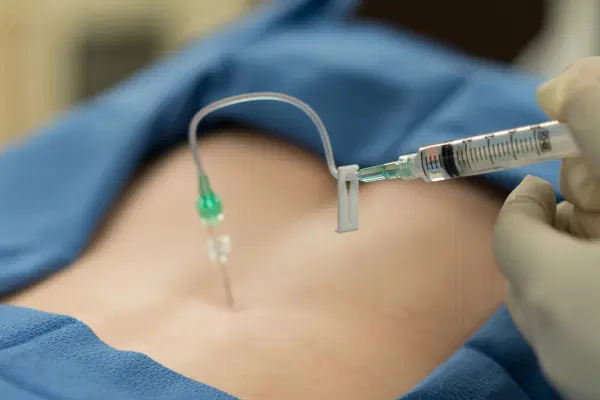
Image-Guided Spinal Injections
When pain persists despite medication and physiotherapy, fluoroscopy or C-arm guided procedures are performed. These include cervical and lumbar epidural steroid injections, transforaminal nerve root blocks, and selective nerve root blocks. The medication is delivered precisely to the inflamed nerve and often gives significant, long-lasting relief without surgery.
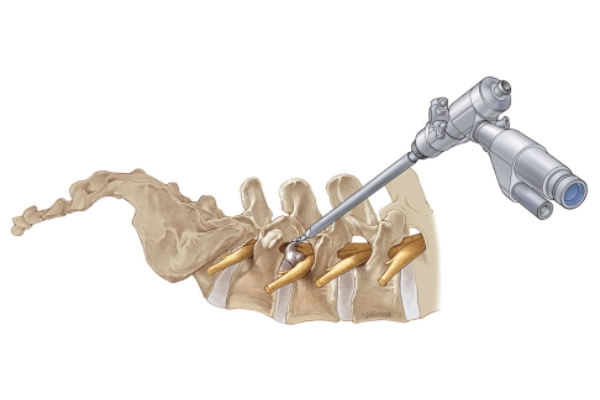
Minimally Invasive and Endoscopic Disc Surgery
For patients with persistent symptoms, progressive weakness, or significant disc herniation, surgical options include microdiscectomy (removal of the herniated fragment under an operating microscope), full endoscopic discectomy (through a keyhole incision), Anterior Cervical Discectomy and Fusion (ACDF) for cervical myelopathy, and cervical disc replacement (arthroplasty) to preserve neck motion in selected patients. Most patients walk within a day and resume light activities within one to two weeks.
Causes and Symptoms of Disc Prolapse
Identifying the cause early and recognising symptoms in time helps prevent long-term nerve damage and significantly improves treatment outcomes.
Common Causes
Disc prolapse usually develops due to age-related degeneration, repeated mechanical stress, improper posture, sudden lifting injuries, or trauma. Other contributing factors include obesity, smoking, a sedentary lifestyle, and occupations involving prolonged sitting, driving, or heavy lifting.
Symptoms of Cervical Disc Prolapse
Patients usually experience neck pain with stiffness, pain radiating to the shoulder or arm, numbness or tingling in the fingers, weakness in the hand grip, and headaches. In advanced cases, cervical myelopathy can cause fine motor difficulty, balance disturbance, and gait imbalance.
Symptoms of Lumbar Disc Prolapse
Symptoms include low back pain, radiating leg pain (sciatica), numbness, tingling, and weakness in the leg or foot. Severe cases may result in foot drop or cauda equina syndrome, where loss of bladder and bowel control requires emergency surgical attention.
Diagnostic Approach to Disc Prolapse
Accurate diagnosis is the foundation of effective spine care. Every patient at Spine 360 is evaluated through a stepwise clinical and imaging protocol before any treatment is planned.
Clinical and Neurological Examination
Examination includes detailed history, neurological assessment, dermatomal sensory mapping, motor power grading, and reflex testing. Specific tests like Spurling's test, Hoffman's sign, and Lhermitte's sign are used for cervical cases, while the Straight Leg Raise test (Lasègue's sign) and slump test help confirm lumbar nerve root involvement.
Imaging and Electrophysiological Studies
MRI of the cervical or lumbar spine is the gold standard for visualising disc herniation, nerve compression, and spinal cord changes. Digital X-rays check alignment and bony changes, while CT scans, CT myelograms, EMG, and Nerve Conduction Velocity (NCV) studies are used in selected cases to confirm the affected nerve root.
Why Consult Dr. Rohit Thaker for Disc Prolapse Care
Choosing the right spine specialist makes a major difference in recovery, surgical outcome, and avoiding unnecessary procedures.
Internationally Trained Spine Surgeon
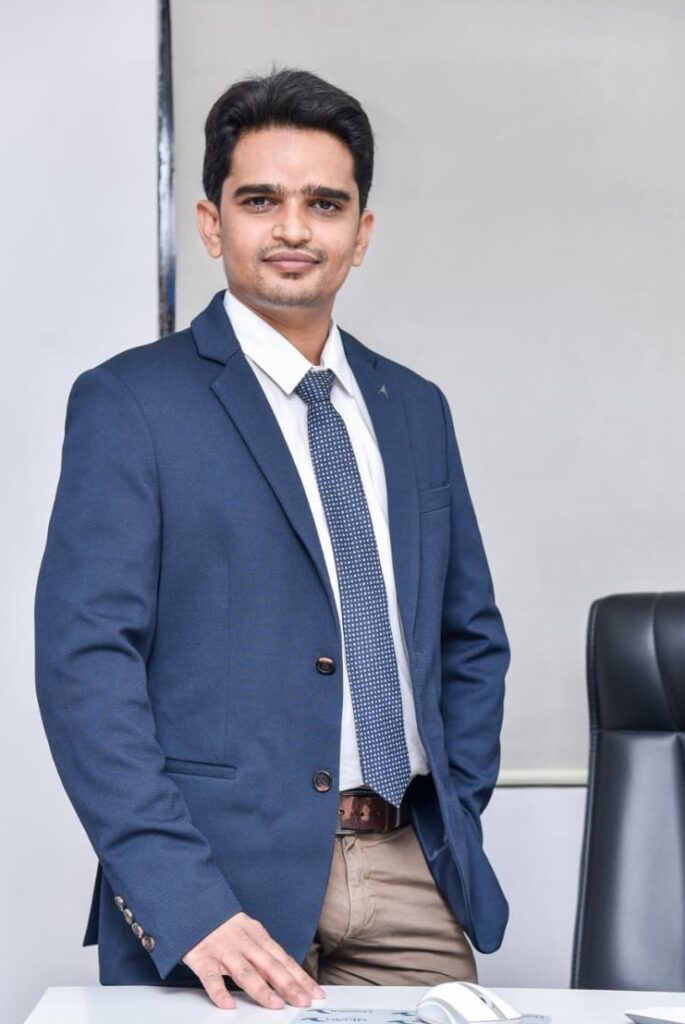
Dr. Thaker is a DNB-certified orthopaedic and spine surgeon with advanced fellowship training in Germany, Japan, and Israel, covering both cervical spine surgery and complex lumbar disc procedures.
Endoscopic and Minimally Invasive Expertise
He specialises in full endoscopic and microsurgical techniques for disc prolapse — offering smaller incisions, reduced blood loss, faster recovery, and significantly less post-operative pain compared to traditional open surgery.
Surgery Only When Truly Indicated
Most patients are first treated with medication, physiotherapy, and image-guided injections. Surgery is recommended only when conservative treatment fails or when there is progressive neurological weakness, myelopathy, or cauda equina syndrome.
Frequently Asked Questions
What is the difference between cervical and lumbar disc prolapse?
Cervical disc prolapse affects the neck and causes pain, numbness, or tingling in the arm and hand. Lumbar disc prolapse affects the lower back and causes pain or numbness radiating down the leg.
Can a slipped disc heal on its own?
Yes, in many cases the prolapsed disc material gradually shrinks over weeks or months. Around 80 to 90 percent of disc prolapse cases recover well with non-surgical treatment.
How long does recovery from disc prolapse usually take?
Mild cases improve within four to six weeks with rest, medication, and physiotherapy. More severe cases that need injections or surgery may take two to three months for complete recovery.
When is surgery actually needed for disc prolapse?
Surgery is considered if there is severe pain not responding to medication, progressive weakness, foot drop, hand clumsiness, or signs of spinal cord or cauda equina compression.
Is minimally invasive disc surgery safe?
Yes. Minimally invasive and endoscopic disc surgeries are highly safe when performed by experienced spine surgeons. They cause less tissue damage and allow patients to return to normal life much sooner.
Will I need spinal fusion for a disc prolapse?
Not always. Fusion is mainly needed for instability, recurrent disc herniation, or cervical cord compression. Many patients can be treated with disc replacement or simple discectomy without fusion.
Can a disc prolapse come back after treatment?
Recurrence is possible if the spine is not protected. Regular spine exercises, correct posture, weight management, and avoiding heavy lifting significantly reduce the chance of re-herniation.
What lifestyle changes help prevent disc prolapse?
Maintaining good posture, doing regular spine-strengthening exercises, using ergonomic seating, avoiding prolonged sitting, lifting weights correctly, and managing body weight all help in keeping the spine healthy.

Spine Specialist & Back Pain Expert
Clinic hours: Monday to Saturday | Emergency spine care available.