Does Minimally Invasive Spine Surgery Cause Less Pain?
Being told you may need spine surgery is frightening. The first question most people ask is, “Will it hurt a lot?” The second is, “How long before I can get back to normal life?”
If you are exploring minimally invasive spine surgery, these worries are completely understandable. You are not alone in them. Let’s go through what this approach really offers, and where its limits are.
What Is Minimally Invasive Spine Surgery?
In traditional open surgery, the surgeon makes a longer cut along the back. The muscles are moved aside so the spine can be reached and treated.
Minimally invasive surgery aims for the same result with a smaller footprint. The surgeon makes one or more small cuts, often less than an inch or two. Thin tubes, tiny cameras, and fine instruments are then used to reach the problem area.
How is it different from open surgery?
The main difference is how much healthy tissue is disturbed on the way in.
- The cuts are smaller
- Muscles are gently spread apart rather than widely cut or stripped
- A camera or microscope gives the surgeon a clear, magnified view
- Surrounding tissue faces less handling
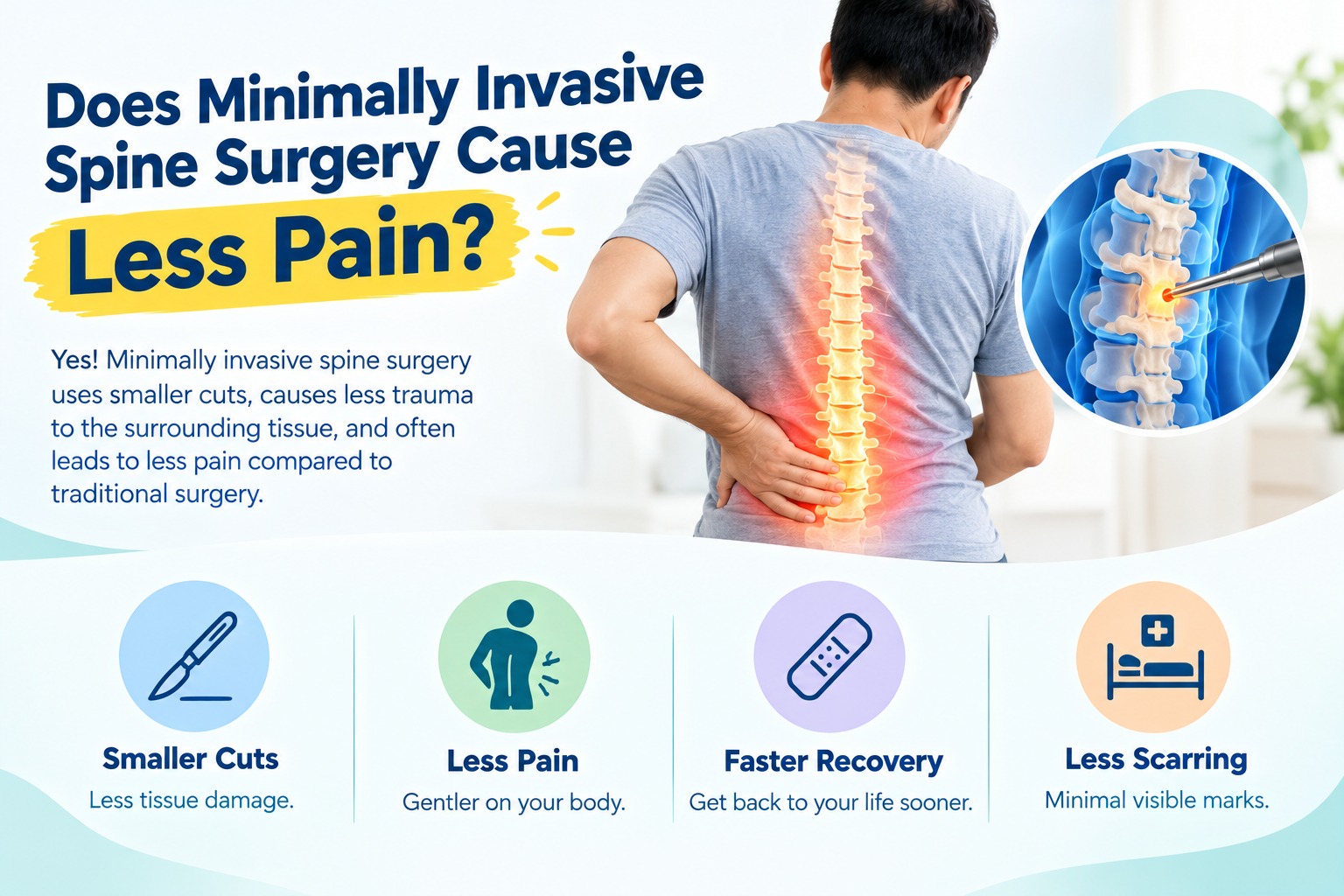
Does Minimally Invasive Spine Surgery Cause Less Pain?
For many patients, yes. Most people report less pain in the days after surgery compared with open surgery for the same problem.
That said, it is not painless. You will likely feel soreness around the wound and some back or leg discomfort as the area heals. The difference is that the pain is often milder and easier to manage with simple medicines.
Every body heals differently, so your experience may vary. Your age, health, and the condition being treated all play a part.
Why Does Recovery Often Feel Easier?
Muscles are a big reason. Your back muscles work all day to keep you upright, and cutting through them causes much of the pain after open surgery.
When muscles are spared, several things tend to follow:
- Less pain after surgery, so fewer painkillers are needed
- Less blood loss, which helps your body recover faster
- A shorter hospital stay, sometimes just a day or two
- Smaller scars, which many patients prefer
- Earlier walking, which lowers the risk of stiffness and complications
Getting up and moving soon after surgery is one of the best things you can do for healing.
Which Spine Problems Can Be Treated With Minimally Invasive Surgery?
This approach is used for a growing range of conditions. Your surgeon will look at your scans and symptoms to see if it fits.
Common examples include:
- Slipped or bulging disc pressing on a nerve
- Sciatica that has not improved with medicines and physiotherapy
- Spinal stenosis, where the space around the nerves becomes narrow
- Selected spinal instability that needs stabilisation with screws
Is Minimally Invasive Surgery Right for Everyone?
Honestly, no. Smaller cuts sound appealing, but the best surgery is the one that safely fixes your problem.
Some conditions, such as severe deformity, certain fractures, infections, or complex multi-level problems, may need open surgery. In those cases, a larger approach is safer and gives a better result.
A good surgeon will tell you this plainly. Choosing the technique should always come after the diagnosis, never before it.
Do you always need surgery for back problems?
Not at all. Most back and leg pain improves with rest, medicines, physiotherapy, and lifestyle changes. Surgery is usually considered when:
- Pain continues despite several weeks of proper treatment
- Leg weakness or numbness is increasing
- Daily life, work, or sleep is badly affected
- There are urgent signs like loss of bladder or bowel control
What Can You Expect Before and After Surgery?
Knowing the path ahead makes it less scary. Here is a general picture, though your surgeon will guide you personally.
Before surgery: You will have a detailed check-up, scans such as an MRI, and blood tests. You will also be told which medicines to pause and when to stop eating and drinking.
After surgery: Most patients start walking within hours or the next day. Mild pain is treated with medicines, and you will be shown safe ways to sit, stand, and move.
How can you help your own recovery?
- Walk short distances several times a day
- Avoid heavy lifting and sudden twisting until cleared
- Follow the physiotherapy plan, even on lazy days
- Keep the wound clean and dry as advised
- Eat well and stay hydrated
- Report fever, wound discharge, or worsening pain promptly
What Questions Should You Ask Your Spine Surgeon?
A good consultation should leave you feeling informed, not rushed. Consider asking:
- Do I truly need surgery, or can I try other treatment first?
- Am I a good candidate for a minimally invasive approach?
- What are the risks and expected benefits in my case?
- How long will recovery take before I return to work?
- What happens if the surgery does not fully relieve my pain?
Getting a second opinion is completely fine, and any caring doctor will respect it.
Ready to Talk to a Spine Specialist in Ahmedabad?
Minimally invasive spine surgery often means smaller cuts, less pain, and a quicker return to daily life. For the right patient, it can make a hard decision feel far more manageable.
Still, it is not the answer for every back problem, and the right choice depends on your scans, symptoms, and overall health. If you are considering minimally invasive spine surgery in Ahmedabad, you are welcome to consult Dr. Rohit Thaker. A calm, honest conversation can help you understand your options and decide what is best for you.