
Could Numbness in Your Legs Mean a Spine Issue? Here's What You Need to Know
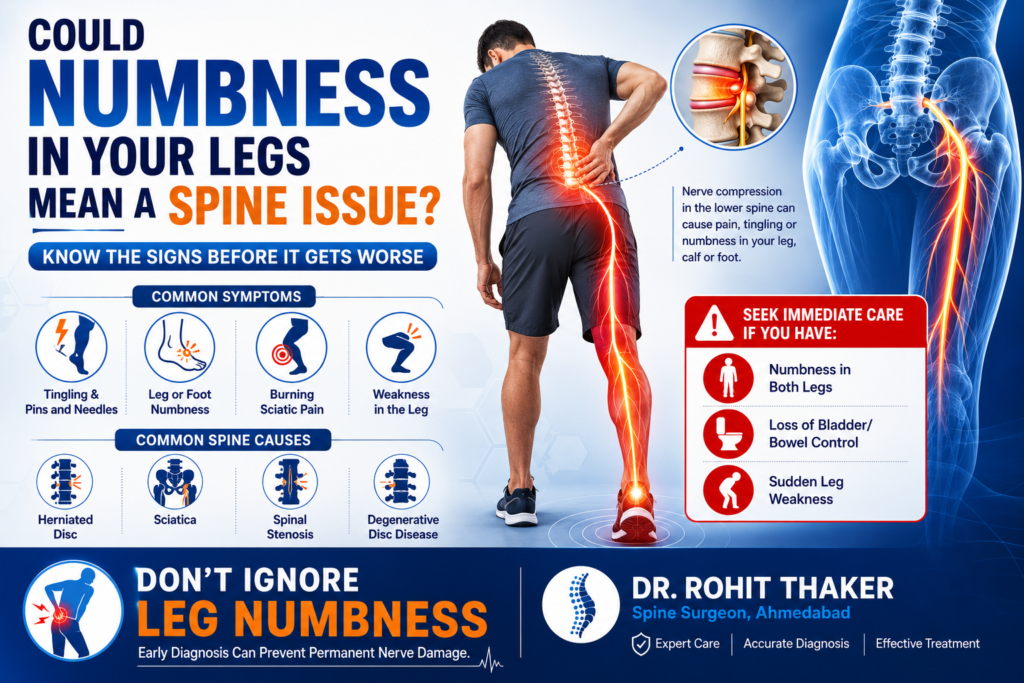
That strange tingling in your leg that won’t go away. The feeling of your foot “falling asleep,” except it happens at random, even when you’re just sitting at your desk. Many people brush off leg numbness as nothing serious, assuming it’s just a circulation issue or a passing cramp. But when it keeps coming back, or when it travels down from your lower back all the way to your foot, it’s worth paying closer attention.
Leg numbness is one of the most common reasons patients come in seeking sciatica treatment in Ahmedabad , and for good reason. In many cases, what feels like a leg problem actually starts in the spine.
Your Spine and Your Legs Are More Connected Than You Think
The spine isn’t just a stack of bones. It’s the main highway for your nervous system. Nerves branch out from your spinal cord at every level and travel to different parts of your body, including your legs, feet, and toes.
When something compresses or irritates these nerves, such as a bulging disc, a narrowed spinal canal, or inflamed tissue, the signal gets disrupted. And because nerves are long structures, you can feel the effects far from where the actual problem is. That’s why a disc issue in your lower back can cause numbness all the way down to your calf or foot.
This is the fundamental reason why leg symptoms are often a spine problem in disguise.
What Is Sciatica and Is That What You Have?
The sciatic nerve is the longest nerve in the body. It starts in the lower spine, passes through the buttocks, and runs down the back of each leg. When this nerve gets compressed or irritated, usually by a herniated disc or bone spur in the lumbar spine, it can cause a very specific set of symptoms.
Common signs of sciatica include:
- A sharp, shooting pain that starts in the lower back or buttock and travels down one leg
- Numbness or a “pins and needles” sensation in the leg, calf, or foot
- Weakness in the leg or difficulty lifting the foot (called foot drop in severe cases)
- Pain that worsens when sitting for long periods or when sneezing and coughing
- A burning or electric-shock sensation along the path of the nerve
Most people experience these symptoms on one side of the body. If both legs are affected, that’s a more urgent sign that needs immediate evaluation.
Sciatica isn’t a diagnosis on its own; it’s a symptom of an underlying spine condition. Identifying that root cause is what makes treatment effective.
Other Spine Conditions That Can Cause Leg Numbness
Sciatica gets most of the attention, but it’s not the only spinal condition that causes leg symptoms. Here are a few others worth knowing:
Spinal Stenosis: This is a narrowing of the spinal canal that puts pressure on the nerves inside. It’s more common in people over 50. The numbness it causes tends to get worse with walking or standing and often improves when you sit down or lean forward slightly.
Degenerative Disc Disease As spinal discs lose height and hydration over time, they can bulge or collapse, pressing on nearby nerve roots. This is one of the most common causes of radiating leg symptoms in middle-aged and older adults.
Spondylolisthesis: This is when one vertebra slips forward over the one below it. The shift in position can pinch nerves and cause numbness, tingling, or weakness in the legs.
Piriformis Syndrome Technically not a spinal condition, but closely related. The piriformis muscle in the buttock sits right next to the sciatic nerve. When it’s tight or inflamed, it can mimic sciatica almost exactly, which is why proper diagnosis matters so much.
When Leg Numbness Becomes an Emergency
Most cases of leg numbness from spine issues can be managed with appropriate treatment and time. But certain symptoms require urgent medical attention; please don’t wait if you notice the following:
- Sudden numbness or weakness in both legs
- Loss of bladder or bowel control
- Numbness in the groin or inner thighs (saddle area)
- Rapid worsening of symptoms over hours or days
- Numbness following a fall, accident, or trauma
These can be signs of cauda equina syndrome, a rare but serious condition where multiple nerves in the lower spine are compressed simultaneously. It requires emergency treatment to prevent permanent nerve damage.
Practical Steps You Can Take Right Now
While you’re waiting for your appointment, or if your symptoms are mild, these steps can help manage discomfort:
- Avoid prolonged sitting: get up and walk for a few minutes every hour
- Apply a heat packto the lower back to ease muscle tension around the nerve
- Try gentle nerve gliding exercises(ask a physiotherapist to show you the right technique).
- Sleep on your sidewith a pillow between your knees to reduce spinal pressure
- Avoid heavy liftingor activities that increase the tingling or shooting sensation
- Don’t ignore worsening symptoms: if the numbness spreads or weakness appears, see a doctor promptly
Prevention: Because the Best Outcome Is Avoiding the Problem
Once you’ve recovered, keeping your spine healthy becomes the priority. Some habits that make a real difference:
- Strengthen your coreconsistently; a strong core is your spine’s best support system
- Maintain a healthy weight:every extra kilogram adds to the load your lumbar discs carry
- Stretch regularly, especially the hamstrings and hip flexors, which directly affect spinal alignment
- Be mindful of posturewhen driving, sitting at a desk, or using your phone for extended periods
- Stay active: a sedentary lifestyle is one of the biggest risk factors for recurrent disc problems
Final remarks
Leg numbness might seem like a minor inconvenience, but when it’s connected to the spine, it’s a signal worth taking seriously. Whether you’re dealing with the classic shooting pain of sciatica or a more subtle tingling that comes and goes, the underlying cause matters, and it can almost always be addressed effectively with the right care.
If you’re looking for expert sciatica treatment, Dr. Rohit Thaker is here to help you get clarity, a proper diagnosis, and a treatment plan that actually fits your life. You don’t have to keep wondering what’s causing that numbness or keep putting up with it.