Why Does My Back Hurt When I Bend Forward?
Have you ever reached down to pick up something from the floor and felt a sharp, stabbing pain shoot through your lower back? You’re not alone. Millions of people experience back pain when bending forward, and it’s one of the most common complaints seen in spine clinics across India. If you’ve been searching for reliable back pain treatment, understanding why this happens is the first step toward real relief.
Back pain during forward bending doesn’t always mean something serious is wrong. But it does deserve attention, especially when the pain keeps coming back or starts affecting your daily life.
What Actually Happens When You Bend Forward?
When you bend forward, your spine isn’t just folding in half. Your vertebrae (the small bones that stack up to form your spine), the discs between them, and dozens of muscles and ligaments all work together in a carefully coordinated movement.
When any part of this system is under stress, whether from injury, wear and tear, or poor posture, bending forward can trigger pain. The lower back, or lumbar region, takes the most load during this movement, which is why that’s usually where the pain shows up.
Common Causes of Back Pain When Bending Forward
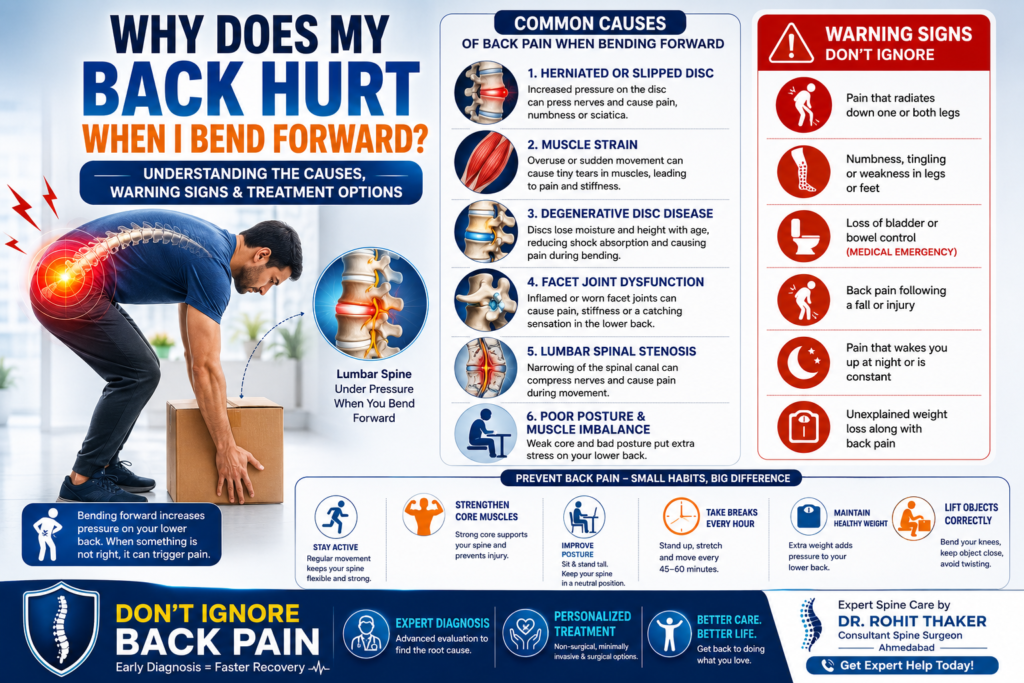
1. Herniated or Slipped Disc
A disc herniation happens when the soft inner material of a spinal disc pushes out through a crack in its outer layer. Bending forward increases pressure on the disc, which can press on nearby nerves and cause pain, numbness, or a radiating sensation down the legs (often called sciatica).
2. Muscle Strain
This is the most frequent culprit. Overusing your back muscles, through lifting, exercise, or even sitting in one position too long, can cause micro-tears in the muscle tissue. Bending forward stretches these already-irritated muscles, leading to sharp or aching pain.
3. Degenerative Disc Disease
As we age, the discs in our spine naturally lose moisture and height. This makes them less effective as shock absorbers. Forward bending places extra stress on these weakened discs, causing discomfort and stiffness, especially first thing in the morning.
4. Facet Joint Dysfunction
Facet joints are small joints at the back of each vertebra that help control spinal movement. When these joints become inflamed or worn down (a condition called facet arthropathy), bending forward can feel stiff, painful, or even cause a “catching” sensation in the spine.
5. Lumbar Spinal Stenosis
Stenosis means narrowing. When the spinal canal narrows, it can compress the nerves running through it. Interestingly, people with stenosis often feel more relief when bending forward (which opens the canal slightly), but prolonged flexion can still aggravate symptoms.
6. Poor Posture and Muscle Imbalance
Spending hours hunched over a desk or phone weakens the core muscles that support the spine. Without this support, even simple movements like bending down become painful over time.
Warning Signs You Shouldn't Ignore
Most back pain resolves on its own with rest and basic care. But certain symptoms call for prompt medical attention:
- Pain that radiates down one or both legs
- Numbness, tingling, or weakness in the legs or feet
- Loss of bladder or bowel control (this is a medical emergency)
- Back pain following a fall or injury
- Pain that wakes you up at night or is constant
- Unexplained weight loss alongside back pain
If any of these apply to you, please don’t delay , consult a spine specialist right away.
Back Pain Treatment: What Are Your Options?
The good news is that the majority of back pain cases respond well to non-surgical treatment. Here’s what modern spine care looks like:
Conservative (Non-Surgical) Treatments
- Physiotherapy– Targeted exercises to strengthen the core, improve flexibility, and correct posture are often the most effective long-term solution
- Medications—Pain relievers, anti-inflammatory drugs, and muscle relaxants can provide short-term relief
- Hot and cold therapy– Simple but effective for reducing inflammation and muscle tension
- Epidural steroid injections– For nerve-related pain that hasn’t improved with other methods
Minimally Invasive Procedures
When conservative care isn’t enough, minimally invasive options can help, with far less recovery time than traditional surgery. Services available at Dr. Rohit Thaker’s clinic include targeted nerve blocks, disc procedures, and other advanced interventional treatments.
Surgical Treatment
Surgery is considered only when all other options have been tried and symptoms are severely affecting quality of life. Common procedures include microdiscectomy (for herniated discs) and spinal decompression (for stenosis). Dr. Rohit Thaker is an experienced spine surgeon in Ahmedabad who guides patients carefully through these decisions.
Recovery Tips to Help You Heal Faster
Whether you’re managing back pain at home or recovering after a procedure, these practical steps make a real difference:
- Don’t stay in bed too long: Gentle movement helps recovery; prolonged bed rest can actually worsen stiffness
- Apply ice in the first 48–72 hoursof a new injury, then switch to heat
- Sleep on your sidewith a pillow between your knees to take pressure off the spine
- Avoid bending from the waist:instead, bend your knees and squat when picking things up
- Stay hydrated;your spinal discs are mostly water and need hydration to function well
- Follow your physiotherapy planconsistently, even on good day
How to Prevent Back Pain From Coming Back
Prevention is always better than treatment. Small daily habits go a long way:
- Strengthen your core: Exercises like planks, bridges, and gentle yoga support the spine without straining it
- Mind your postureat your desk, in the car, and while using your phone
- Take regular breaksfrom sitting; aim to stand and move every 45–60 minutes
- Wear supportive footwear: poor footwear affects your entire posture chain
- Maintain a healthy weight: extra weight increases spinal load significantly
- Lift correctly: always bend at the knees, keep the object close to your body, and avoid twisting while carrying
Final Thought
Back pain when bending forward is your body’s way of saying something needs attention. Whether it’s a minor muscle strain or a more complex disc issue, understanding the cause is the key to finding the right solution. With the right diagnosis, a structured treatment plan, and a few smart lifestyle adjustments, most people recover fully and go back to living pain-free.
If you’re looking for expert back pain treatment in Ahmedabad, Dr. Rohit Thaker and his team are here to help you get the answers and the relief you deserve. Don’t let back pain hold you back from the life you want to live.