Why Does My Back Hurt After Pregnancy?
Bringing a new baby home is exciting, exhausting, and honestly, a lot for your body to process. Somewhere between the sleepless nights and constant baby-holding, many new moms notice their back starting to ache in ways it never did before. If that’s you, you’re far from alone. Let’s talk about why this happens and what actually helps.
Why Does Pregnancy Cause Back Pain in the First Place?
Your body goes through massive changes over nine months, and your back takes on a lot of that load.
- Your growing belly shifts your center of gravity forward, changing your posture
- Extra weight puts more pressure on your spine and pelvis
- Hormones like relaxin loosen ligaments and joints to prepare for childbirth, which can make your lower back and pelvis feel less stable
- Weakened core muscles, since your abdominal muscles stretch significantly during pregnancy
By the time you deliver, your back has already been working overtime for months.
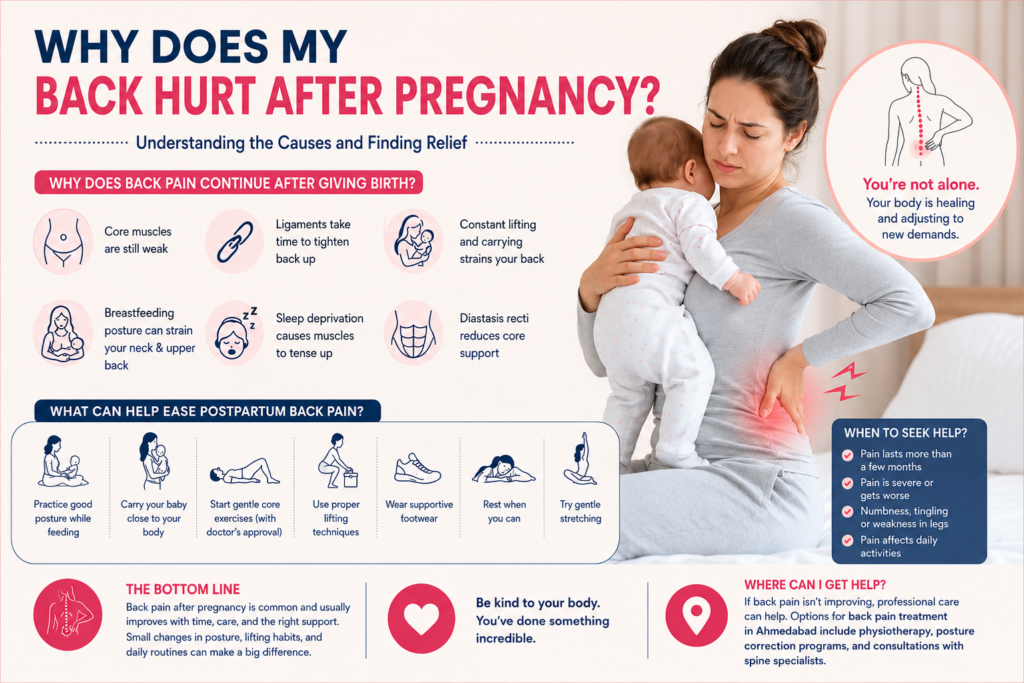
Why Does Back Pain Continue After Giving Birth?
You’d think the back pain would ease up once the baby arrives, but for many women, it sticks around or even gets worse for a while.
- Your core muscles are still weak and need time to rebuild strength
- Ligaments loosened during pregnancy take weeks or months to tighten back up
- Constant bending, lifting, and carrying your baby puts repeated strain on your back
- Breastfeeding positions, especially hunching forward, can strain your neck and upper back
- Sleep deprivation makes muscles feel tighter and more sensitive to pain
- Some women experience a condition called “diastasis recti,” where the abdominal muscles separate during pregnancy, reducing core support for the back
Basically, your body is recovering from a major physical event while immediately taking on new physical demands, like carrying a baby all day.
Is This Normal, or Should I Be Worried?
For most new moms, this kind of back pain is common and expected, not a sign that something is seriously wrong.
- Mild to moderate soreness in the lower back is typical in the weeks and months after delivery
- Pain usually improves gradually as your body heals and muscles regain strength
- It’s worth checking in with a doctor if pain is severe, doesn’t improve after several weeks, or comes with numbness, tingling, or weakness in your legs
Most of the time, this is your body adjusting and rebuilding rather than something to panic about.
What Can I Do to Ease Postpartum Back Pain?
The good news is there are simple, practical steps that genuinely help.
- Practice good posture while feeding. Use a pillow to support your baby at chest height instead of leaning forward.
- Support your back while carrying your baby. Hold your baby close to your body rather than at arm’s length to reduce strain.
- Start gentle core exercises once cleared by your doctor. Pelvic tilts and gentle abdominal exercises help rebuild support for your spine.
- Use proper lifting technique. Bend your knees, not your back, when picking up your baby or their gear.
- Wear supportive footwear. Comfortable, supportive shoes make a real difference during long days on your feet.
- Rest when you can. Even short breaks lying down can relieve pressure on your back.
- Try gentle stretching. Cat-cow stretches and child’s pose can ease tension in the lower back.
When Should I Consider Physical Therapy?
If pain lingers beyond a few months or interferes with daily activities, physical therapy can be genuinely helpful.
- A physical therapist can assess posture, core strength, and movement patterns specific to postpartum recovery
- They can guide you through safe exercises tailored to your body’s healing stage
- Many women find structured guidance speeds up recovery compared to figuring it out alone
Does Weight Play a Role in Postpartum Back Pain?
Yes, weight can be a factor, both from pregnancy weight gain and any weight carried before pregnancy. Extra weight adds pressure on the spine and joints, which can prolong back discomfort during recovery. For most new moms, gradual weight loss through balanced nutrition and gentle activity, once cleared by a doctor, is enough to ease this pressure over time. In rare cases where weight-related health concerns persist long after pregnancy and significantly affect quality of life, some women may eventually discuss broader options like weight loss surgery with their doctor, though this is typically considered well after postpartum recovery and only after other approaches have been tried.
Where Can I Get Help for Ongoing Back Pain?
If your back pain isn’t improving on its own, seeking professional guidance can make a real difference. Options for back pain treatment in Ahmedabad include physical therapy, posture correction programs, and consultations with spine specialists who can identify the exact cause of your discomfort and recommend a suitable recovery plan.
The Bottom Line
Back pain after pregnancy is common and usually improves with time, gentle movement, and a little patience with your body. Simple changes to posture, lifting habits, and daily routines can ease a lot of the discomfort. If pain persists or feels severe, don’t hesitate to reach out for professional support.
For personalized guidance on managing postpartum back pain, consulting an experienced specialist like Dr. Rohit Thaker can help you find the right recovery plan for your body.