What Lifestyle Changes Help Recovery From Spinal Tuberculosis?
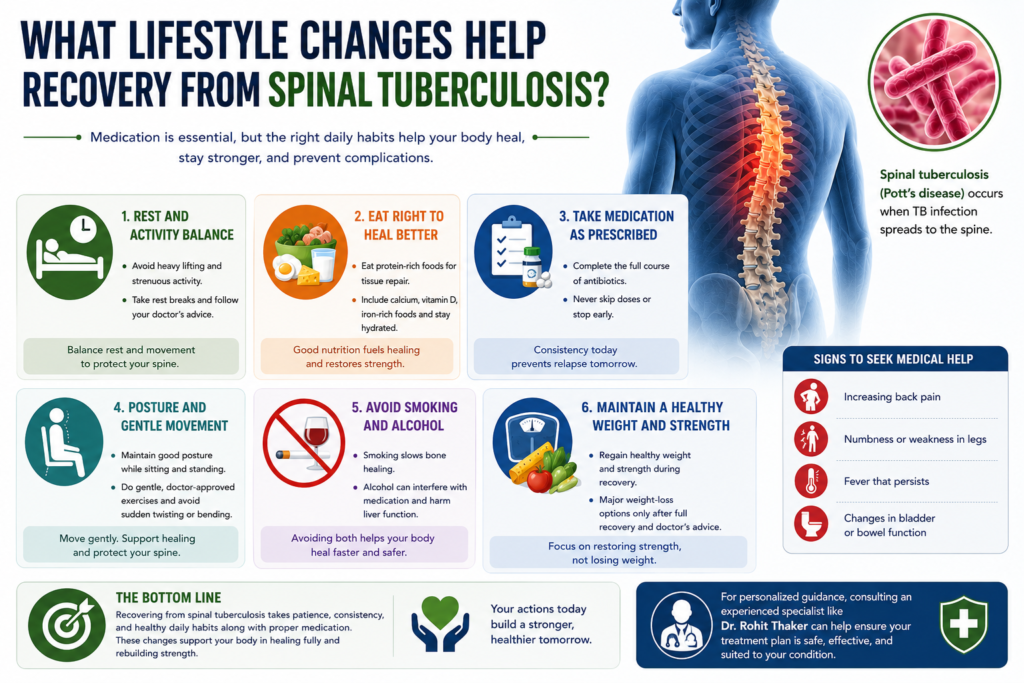
Hearing the words “spinal tuberculosis” can feel overwhelming at first. It’s a serious condition, but with proper treatment and the right daily habits, most people recover well and go on to live full, active lives. Medication is the foundation of treatment, but what you do outside the doctor’s office matters just as much. Let’s go through the lifestyle changes that genuinely support recovery.
What Is Spinal Tuberculosis, in Simple Terms?
Spinal tuberculosis, sometimes called Pott’s disease, happens when the tuberculosis infection, usually known for affecting the lungs, spreads to the bones of the spine.
- It causes inflammation and, in some cases, damage to the spinal bones
- This can lead to back pain, stiffness, and in more advanced cases, changes in posture or nerve-related symptoms
- It’s treatable, especially when caught early and managed consistently with proper medication
The most important part of treatment is completing the full course of prescribed antibiotics, but daily lifestyle habits play a major supporting role in how well and how quickly the body heals.
Why Does Rest Matter So Much During Recovery?
Your spine needs time and stability to heal, especially in the early stages of treatment.
- Avoid heavy lifting or strenuous activity until your doctor confirms it’s safe
- Short periods of rest throughout the day can reduce strain on the spine
- Complete bed rest for long periods usually isn’t recommended either, since gentle movement supports circulation and prevents stiffness
- Following your doctor’s specific activity guidelines matters more than general assumptions about “resting completely.”
Balance is key: enough rest to protect healing bone, but enough movement to avoid becoming weak or stiff.
How Does Nutrition Support Healing?
Good nutrition plays a bigger role in tuberculosis recovery than many people realize, since the body needs extra resources to fight infection and repair tissue.
- Protein-rich foods like eggs, lentils, dairy, and lean meats support tissue repair
- Calcium and vitamin D help maintain bone strength, found in dairy products, leafy greens, and safe sun exposure
- Iron-rich foods like spinach and legumes help combat the fatigue and mild anemia sometimes seen during treatment
- Staying hydrated supports overall healing and helps the body process medication effectively
- Avoiding processed, low-nutrient foods gives the body more energy to focus on recovery
Many people with tuberculosis experience weight loss during the illness, so the nutritional focus during recovery is usually on regaining strength, not losing weight.
Why Is Medication Adherence So Important?
This might be the single most important lifestyle habit during recovery.
- Tuberculosis treatment typically involves several months of antibiotics
- Skipping doses or stopping early, even when you start feeling better, can allow the infection to return, sometimes in a harder-to-treat form
- Setting daily reminders or using a pill organizer can help maintain consistency
- Regular follow-up appointments help your doctor track healing progress through scans or blood tests
Sticking with the full treatment plan, even when it feels tedious, is what actually leads to full recovery.
Do Posture and Gentle Movement Help Recovery?
Yes, once your doctor gives the go-ahead for light activity.
- Gentle, doctor-approved stretching can help maintain flexibility without stressing the healing spine
- Good posture while sitting and standing reduces unnecessary strain
- Supportive braces, if recommended by your doctor, can help stabilize the spine during the healing process
- Avoid sudden twisting or bending motions until your doctor confirms your spine has stabilized
Movement should always be guided by medical advice during this recovery period, since spinal tuberculosis directly affects bone stability.
How Do Habits Like Smoking and Alcohol Affect Recovery?
These habits can significantly slow down healing and interfere with treatment.
- Smoking reduces oxygen flow to tissues, which can slow bone healing
- Alcohol can interact negatively with tuberculosis medications and put extra strain on the liver, which is already processing multiple antibiotics
- Reducing or eliminating both during treatment supports faster, safer recovery
Does Body Weight Affect Spinal Tuberculosis Recovery?
Weight plays a role, though often differently than people expect. Many patients lose weight during active tuberculosis due to the infection itself, so the priority during treatment is usually restoring healthy weight and strength rather than reducing it. For patients with separate, pre-existing weight-related health conditions, options like weight loss surgery are generally not considered until well after tuberculosis treatment is complete and the spine has fully stabilized, since the body needs to focus its energy on healing during active treatment. Any decisions about significant weight management approaches should always be made in coordination with your treating doctor.
Where Can I Get Specialized Care for Spinal Tuberculosis?
Since spinal tuberculosis requires careful, ongoing monitoring, working with the right specialist makes a meaningful difference. Consulting a spinal tuberculosis specialist in Ahmedabad ensures your treatment plan is tailored to your specific stage of infection, with proper monitoring of both the infection and your spine’s stability throughout recovery.
The Bottom Line
Recovering from spinal tuberculosis takes patience, consistency, and a combination of proper medication, good nutrition, gentle movement, and healthy daily habits. While medication does the heavy lifting in clearing the infection, lifestyle choices support the body in healing fully and rebuilding strength.
For personalized guidance through your recovery journey, consulting an experienced specialist like Dr. Rohit Thaker can help ensure your treatment plan is safe, effective, and suited to your specific condition.