Uncategorized

Uncategorized

Does Minimally Invasive Spine Surgery Cause Less Pain?

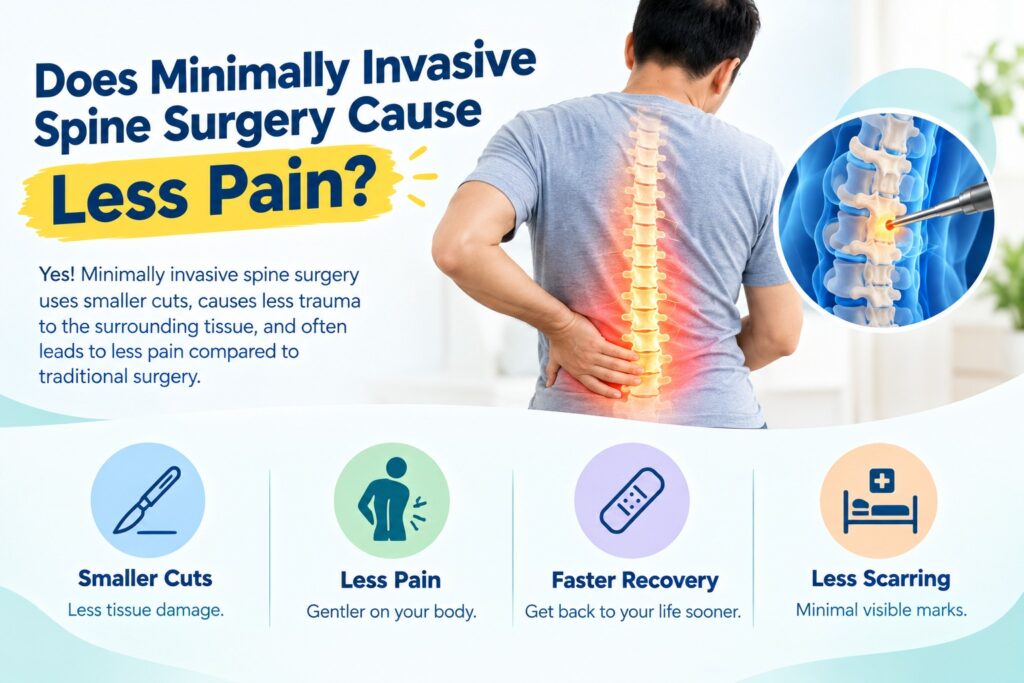
Does Minimally Invasive Spine Surgery Cause Less Pain? Being told you may need spine surgery is frightening. The first question most people ask is, “Will it hurt a lot?” The second is, “How long before I can get back to normal life?” If you are exploring minimally invasive spine surgery, these worries are completely understandable. You are not alone in them. Let’s go through what this approach really offers, and where its limits are. What Is Minimally Invasive Spine Surgery? In traditional open surgery, the surgeon makes a longer cut along the back. The muscles are moved aside so the spine can be reached and treated. Minimally invasive surgery aims for the same result with a smaller footprint. The surgeon makes one or more small cuts, often less than an inch or two. Thin tubes, tiny cameras, and fine instruments are then used to reach the problem area. How is it different from open surgery? The main difference is how much healthy tissue is disturbed on the way in. The cuts are smaller Muscles are gently spread apart rather than widely cut or stripped A camera or microscope gives the surgeon a clear, magnified view Surrounding tissue faces less handling Does Minimally Invasive Spine Surgery Cause Less Pain? For many patients, yes. Most people report less pain in the days after surgery compared with open surgery for the same problem. That said, it is not painless. You will likely feel soreness around the wound and some back or leg discomfort as the area heals. The difference is that the pain is often milder and easier to manage with simple medicines. Every body heals differently, so your experience may vary. Your age, health, and the condition being treated all play a part. Why Does Recovery Often Feel Easier? Muscles are a big reason. Your back muscles work all day to keep you upright, and cutting through them causes much of the pain after open surgery. When muscles are spared, several things tend to follow: Less pain after surgery, so fewer painkillers are needed Less blood loss, which helps your body recover faster A shorter hospital stay, sometimes just a day or two Smaller scars, which many patients prefer Earlier walking, which lowers the risk of stiffness and complications Getting up and moving soon after surgery is one of the best things you can do for healing. Which Spine Problems Can Be Treated With Minimally Invasive Surgery? This approach is used for a growing range of conditions. Your surgeon will look at your scans and symptoms to see if it fits. Common examples include: Slipped or bulging disc pressing on a nerve Sciatica that has not improved with medicines and physiotherapy Spinal stenosis, where the space around the nerves becomes narrow Selected spinal instability that needs stabilisation with screws Is Minimally Invasive Surgery Right for Everyone? Honestly, no. Smaller cuts sound appealing, but the best surgery is the one that safely fixes your problem. Some conditions, such as severe deformity, certain fractures, infections, or complex multi-level problems, may need open surgery. In those cases, a larger approach is safer and gives a better result. A good surgeon will tell you this plainly. Choosing the technique should always come after the diagnosis, never before it. Do you always need surgery for back problems? Not at all. Most back and leg pain improves with rest, medicines, physiotherapy, and lifestyle changes. Surgery is usually considered when: Pain continues despite several weeks of proper treatment Leg weakness or numbness is increasing Daily life, work, or sleep is badly affected There are urgent signs like loss of bladder or bowel control What Can You Expect Before and After Surgery? Knowing the path ahead makes it less scary. Here is a general picture, though your surgeon will guide you personally. Before surgery: You will have a detailed check-up, scans such as an MRI, and blood tests. You will also be told which medicines to pause and when to stop eating and drinking. After surgery: Most patients start walking within hours or the next day. Mild pain is treated with medicines, and you will be shown safe ways to sit, stand, and move. How can you help your own recovery? Walk short distances several times a day Avoid heavy lifting and sudden twisting until cleared Follow the physiotherapy plan, even on lazy days Keep the wound clean and dry as advised Eat well and stay hydrated Report fever, wound discharge, or worsening pain promptly What Questions Should You Ask Your Spine Surgeon? A good consultation should leave you feeling informed, not rushed. Consider asking: Do I truly need surgery, or can I try other treatment first? Am I a good candidate for a minimally invasive approach? What are the risks and expected benefits in my case? How long will recovery take before I return to work? What happens if the surgery does not fully relieve my pain? Getting a second opinion is completely fine, and any caring doctor will respect it. Ready to Talk to a Spine Specialist in Ahmedabad? Minimally invasive spine surgery often means smaller cuts, less pain, and a quicker return to daily life. For the right patient, it can make a hard decision feel far more manageable. Still, it is not the answer for every back problem, and the right choice depends on your scans, symptoms, and overall health. If you are considering minimally invasive spine surgery in Ahmedabad, you are welcome to consult Dr. Rohit Thaker. A calm, honest conversation can help you understand your options and decide what is best for you.
Uncategorized

Can Losing Weight Reduce Back Pain?

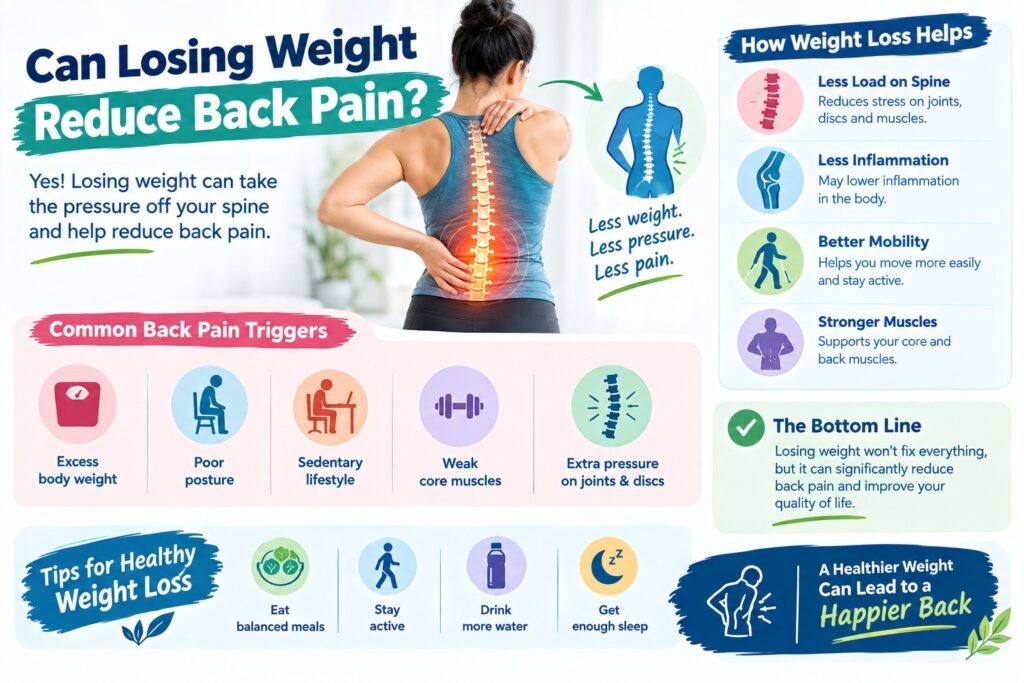
Can Losing Weight Reduce Back Pain? You bend down to pick something up, and your lower back protests. Later, someone at home says, “You should lose some weight.” It stings, and you may wonder if it’s even true. If you’re looking for back pain treatment, you’ve probably heard this advice before. The connection between weight and back pain is real, but it’s more nuanced than most people think. Let’s go through it together, without judgment. Why Does Extra Weight Put So Much Strain on Your Back? Think of your spine as a tall, flexible tower. Muscles and ligaments hold it upright, and small cushions called discs sit between the bones to absorb shock. When you carry extra weight, this tower has more to support. The effect is strongest when the weight sits around your stomach. How does belly weight change your posture? A heavier belly pulls your body slightly forward. To stay balanced, your lower back curves inward more than it should, and the muscles there work overtime, even when you’re just standing. Over months and years, this can cause: Constant dull aching in the lower back Stiffness, especially in the morning Tired back muscles by evening Faster wear and tear of discs and joints Can Losing Weight Really Reduce Back Pain? For many people, yes. When your body carries less load, your spine, discs, and muscles get some relief. Many patients notice they can walk longer, get out of bed more easily, and rely less on painkillers. Weight loss isn’t a magic switch, though. It helps most when the pain comes from strain, poor posture, or early wear in the spine. It works best alongside movement, strength, and proper medical care. How Much Weight Do You Need to Lose to Feel Better? You don’t need to reach some “perfect” number. Research suggests that even losing around 5 to 10 percent of your body weight can make a noticeable difference in pain and movement. For someone weighing 80 kg, that’s roughly 4 to 8 kg. Small wins count. Slow and steady progress is also safer for your back than rapid weight loss. What Are the Safest Ways to Lose Weight When You Have Back Pain? The goal is to lose weight without aggravating your back. Here are some practical starting points. Which exercises are gentle on the back? Walking: Begin with 10 to 15 minutes and increase slowly. Swimming or water walking: The water supports your body and reduces pressure on the spine. Stationary cycling: A low-impact way to stay active. Core-strengthening exercises: A strong tummy and back muscle group works like a natural support belt for your spine. Learn these from a physiotherapist first. What should you eat? You don’t need an expensive diet plan. Simple changes at home go a long way: Fill half your plate with vegetables and salad. Include dal, curd, paneer, eggs, or lean protein in your meals. Cut back on fried snacks, sweets, and sugary drinks. Eat smaller portions of rotli, rice, and bhakhri. Get enough sleep, since poor sleep makes weight loss harder. Please avoid crash diets and heavy gym routines started suddenly. They can strain your back and rarely last. Is Weight Always the Reason for Back Pain? No, and this is worth saying clearly. Many slim, active people also have back pain, and being overweight doesn’t mean it’s your fault. Back pain can also come from: A slipped or bulging disc Nerve compression (sciatica) Long hours of sitting or poor desk posture Weak muscles Age-related changes in the spine Old injuries That’s why guessing the cause can delay proper recovery. An accurate diagnosis matters more than any general advice. When Should You See a Doctor for Back Pain? Most mild back pain improves with rest, movement, and simple care. But don’t ignore pain that keeps returning or slowly gets worse. Please book a consultation if you notice: Pain lasting more than two to three weeks Pain, tingling, or numbness spreading down your leg Weakness in the leg or foot Trouble controlling urine or stool Severe pain at night that doesn’t ease with rest Back pain after a fall or accident Pain along with unexplained weight loss or fever Some of these signs need urgent attention, so please don’t wait them out. What Does Back Pain Treatment Usually Involve? Good treatment starts with listening. A specialist like Dr. Rohit Thaker will typically ask about your symptoms, daily routine, work, and past injuries before recommending any tests. Depending on your condition, the care plan may include: Physical examination and, if needed, scans like an X-ray or MRI Lifestyle and weight management guidance Physiotherapy and posture correction Medicines for pain and inflammation Injections for selected cases Surgery only when it is truly necessary and other options haven’t helped Most people never need surgery. The focus is usually on getting you moving comfortably again, one step at a time. Ready to Take the First Step Toward a Pain-Free Back? Losing weight can reduce back pain, especially when extra weight is adding strain to your spine. Even a small, steady change can help you feel lighter, move better, and sleep more comfortably. But every back is different. If your pain is stubborn, keeps returning, or comes with warning signs, it deserves proper attention. You don’t have to keep managing it alone. If you’re considering back pain treatment in Ahmedabad, you’re welcome to consult Dr. Rohit Thaker. A simple conversation and check-up can give you clarity, and clarity is often the first step toward relief.

Uncategorized

Does Spondylitis Get Worse With Age?

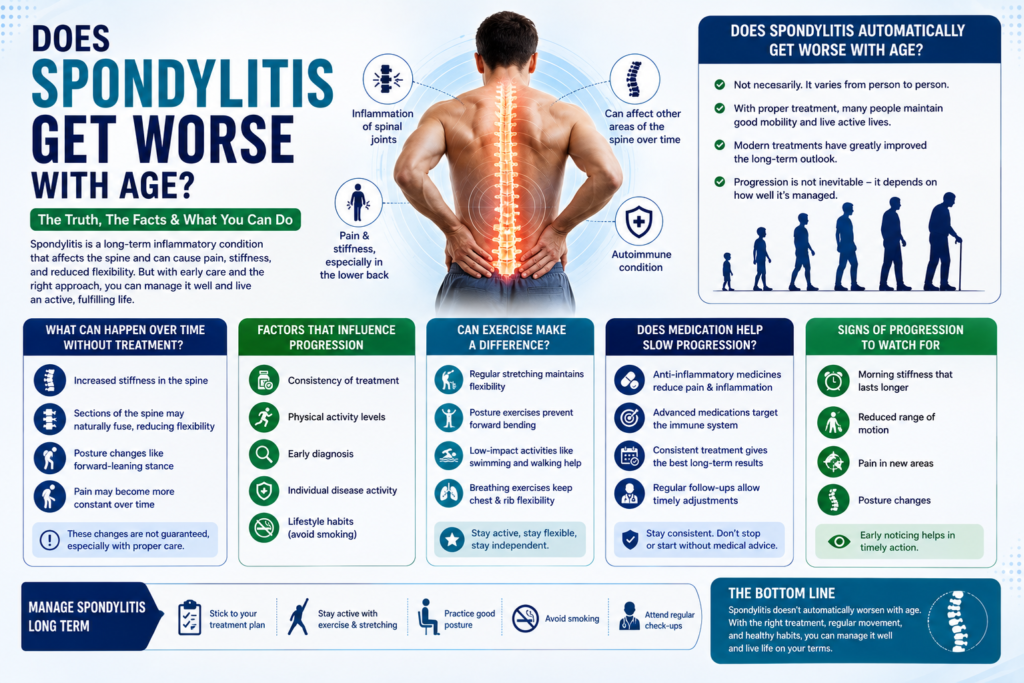
Does Spondylitis Get Worse With Age? If you’ve been diagnosed with spondylitis, or you’re noticing stiffness and pain that makes you suspect it, one question naturally comes up: does this just keep getting worse as the years go by? It’s a fair concern, but the honest answer is more encouraging than most people expect. Let’s break down what actually happens over time and what you can do about it. What Is Spondylitis, in Simple Terms? Spondylitis refers to inflammation of the spinal joints, which can cause stiffness, pain, and in some cases, changes in posture over time. The most common type is ankylosing spondylitis, a long-term inflammatory condition primarily affecting the spine It often starts in the lower back and can gradually involve other areas of the spine It’s considered an autoimmune condition, meaning the body’s immune system mistakenly targets its own joint tissue Symptoms often begin in early adulthood, typically appearing before age 40 Does Spondylitis Automatically Get Worse With Age? Not necessarily, and this is important to understand clearly. The condition varies significantly from person to person, some experience mild, manageable symptoms for life, while others have more noticeable progression With proper treatment, many people maintain good spinal mobility and manage pain effectively for decades Modern treatment approaches have significantly changed the long-term outlook compared to decades past Progression isn’t inevitable or uniform, it depends heavily on how consistently the condition is managed What Changes Might Happen Over Time Without Treatment? Understanding potential changes helps explain why consistent management matters, without assuming the worst will happen. Ongoing inflammation can, over time, lead to increased stiffness in the spine In some cases, this can result in sections of the spine gradually fusing together naturally, reducing flexibility Posture changes, like a forward-leaning stance, can develop in more advanced, unmanaged cases Pain patterns may shift, sometimes becoming more constant rather than coming and going It’s worth emphasizing that these changes are far from guaranteed, especially with appropriate treatment and consistent care. What Factors Influence How Spondylitis Progresses? Several factors play a role in each person’s individual experience with this condition. Consistency of treatment – Staying on prescribed medication and following your doctor’s guidance significantly influences long-term outcomes Physical activity levels – Regular movement and specific exercises help maintain spinal flexibility and reduce stiffness Early diagnosis – Catching and treating the condition early often leads to better long-term results Individual disease activity – Some people naturally have milder inflammation than others, affecting how the condition behaves over time Lifestyle habits – Smoking, in particular, has been linked to more significant spinal changes over time in people with this condition Can Exercise Really Make a Difference? Yes, and this is one of the most impactful things a person can do to influence how the condition progresses. Regular stretching helps maintain flexibility and prevents stiffness from settling in Posture-focused exercises help counteract the forward-leaning changes sometimes seen in advanced cases Low-impact activities like swimming and walking support joint movement without excessive strain Breathing exercises can help maintain chest and rib flexibility, since spondylitis can sometimes affect this area too Staying consistently active is often described by specialists as one of the most important daily habits for managing this condition long term. Does Medication Help Slow Progression? Yes, treatment has advanced significantly over recent years. Anti-inflammatory medications help manage pain and reduce ongoing inflammation Newer classes of medication target the specific immune pathways involved in the condition, helping many people achieve much better long-term control Consistent use of prescribed treatment, rather than stopping and starting, tends to produce the best outcomes Regular follow-up appointments allow adjustments to treatment as needed over time Are There Signs That Spondylitis Is Progressing That I Should Watch For? Being aware of these patterns helps you communicate clearly with your doctor rather than guessing. Increasing stiffness that lasts longer each morning Reduced range of motion when turning or bending New or worsening pain in areas beyond where symptoms initially started Changes in posture noticed by yourself or others over time Noticing these changes early allows for timely adjustments to your treatment plan. What Can I Do to Manage Spondylitis Long Term? A combination of consistent habits tends to produce the best results over time. Stick closely to your prescribed treatment plan Stay physically active with regular stretching and low-impact exercise Practice good posture throughout daily activities Avoid smoking, since it’s linked to more significant spinal changes over time Attend regular follow-up appointments to monitor your condition and adjust treatment as needed Where Can I Get Ongoing Care for Spondylitis? Since this condition benefits so much from consistent, long-term management, working with an experienced specialist makes a real difference. Consulting a spondylitis specialist in Ahmedabad ensures your treatment plan is properly monitored and adjusted over time, helping you maintain mobility and manage symptoms effectively for years to come. The Bottom Line Spondylitis doesn’t automatically worsen with age for everyone. With consistent treatment, regular movement, and healthy lifestyle habits, many people manage this condition effectively for decades. Staying proactive with your care plan plays a much bigger role in your long-term outlook than age alone. For personalized guidance on managing spondylitis over the long term, consulting an experienced specialist like Dr. Rohit Thaker can help you maintain mobility and quality of life.

Uncategorized

Is an Uneven Shoulder a Sign of Scoliosis?

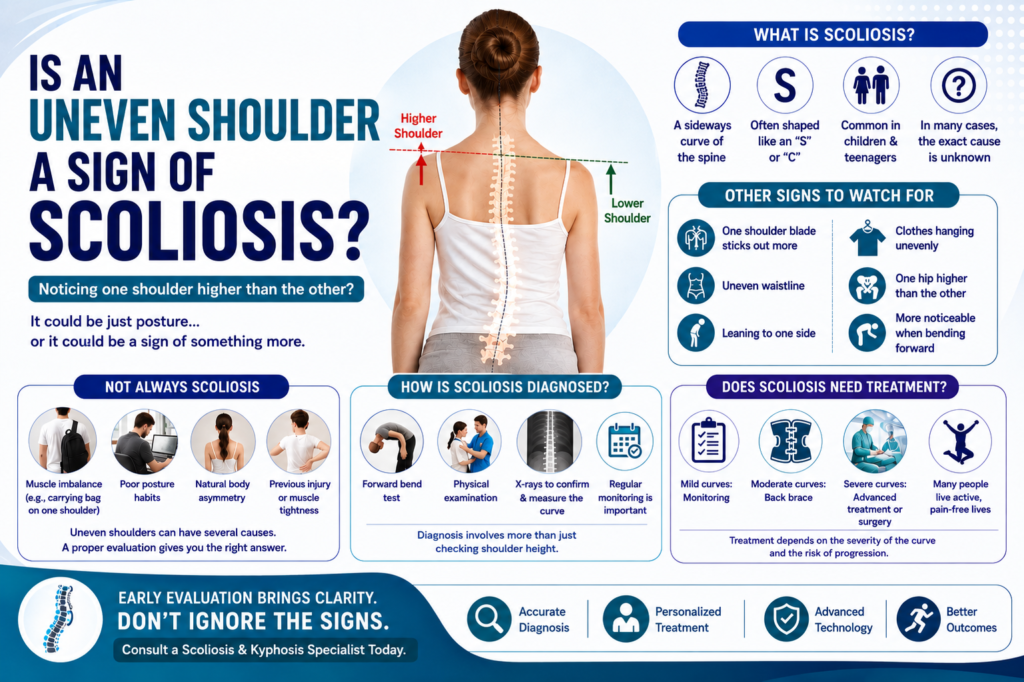
Is an Uneven Shoulder a Sign of Scoliosis? Noticing that one shoulder sits a little higher than the other, whether it’s your own or your child’s, can understandably make you pause. Is it just how the body naturally sits, or could it be a sign of something like scoliosis? Let’s walk through what uneven shoulders can actually mean and when it’s worth taking a closer look. What Is Scoliosis, in Simple Terms? Scoliosis is a sideways curve in the spine, rather than the spine running in a straight line down the back. It’s often shaped like a gentle “S” or “C” when viewed from behind It can range from very mild, barely noticeable, to more pronounced curves It commonly develops during childhood or the early teenage growth spurt, though it can appear at other ages too In many cases, the exact cause isn’t known, which doctors refer to as idiopathic, simply meaning “without a clear identified cause.” Can Uneven Shoulders Really Be a Sign of Scoliosis? Yes, uneven shoulders are one of the more common visible signs associated with scoliosis, though they’re not the only possible explanation. A spinal curve can shift the position of the shoulder blades, making one appear higher than the other It may also cause one side of the ribcage to appear more prominent than the other The unevenness is often more noticeable when bending forward, since this position can make a spinal curve more visible Even a mild curve can sometimes create a noticeable difference in shoulder height What Other Signs Might Point to Scoliosis? Uneven shoulders rarely show up completely on their own, so it helps to look at the fuller picture. One shoulder blade sticking out more than the other Uneven waistline, where one side appears higher or has a more pronounced curve Leaning slightly to one side when standing Clothes hanging unevenly, even when they fit properly One hip appearing higher than the other Looking for a combination of these signs, rather than just one, gives a clearer picture of whether scoliosis might be involved. Could Uneven Shoulders Be Caused by Something Other Than Scoliosis? Yes, and this is worth keeping in mind before jumping to conclusions. Muscle imbalance from repetitive activities, like carrying a bag on one shoulder consistently, can cause temporary unevenness Posture habits, especially in people who spend long hours at a desk, can create the appearance of uneven shoulders Minor differences in shoulder height are actually quite common and don’t always indicate a spinal issue Previous injuries or muscle tightness on one side of the body can also contribute to this appearance Since several things can cause uneven shoulders, a proper evaluation is the only reliable way to know what’s actually behind it. How Is Scoliosis Actually Diagnosed? Diagnosis involves more than just visually checking shoulder height. The forward bend test, where a person bends forward at the waist, is a simple screening method that can reveal spinal curves more clearly A physical examination checks posture, shoulder and hip alignment, and spinal curvature X-rays are typically used to confirm the diagnosis and measure the exact degree of the curve Regular monitoring, especially in growing children, helps track whether a mild curve is stable or progressing over time Does Scoliosis Always Need Treatment? Not necessarily, treatment depends heavily on the severity of the curve and whether it’s likely to progress. Mild curves are often simply monitored with periodic check-ups, especially in children who are still growing Moderate curves may be managed with a back brace to help prevent further progression during growth More significant curves, particularly those affecting posture, breathing, or causing ongoing pain, may require more focused treatment, including surgery in select cases Many people with mild scoliosis live full, active lives without ever needing surgical treatment Is Scoliosis Only a Concern for Children? No, though it’s more commonly identified during childhood and adolescent growth spurts. Some cases go unnoticed until adulthood, especially if the curve was very mild Degenerative scoliosis can also develop later in life due to age-related changes in the spine Adults may notice uneven shoulders or posture changes gradually, rather than the more sudden appearance often seen during growth spurts in children When Should I See a Specialist About Uneven Shoulders? While mild shoulder unevenness is often harmless, certain signs are worth having properly evaluated. Uneven shoulders combined with other signs, like an uneven waistline or visible spinal curve Noticeable changes in posture or shoulder height over a relatively short period Back pain accompanying the visible unevenness Any concerns during a child’s growth spurt, since early evaluation allows for better monitoring Where Can I Get a Proper Evaluation? If you’re noticing uneven shoulders in yourself or your child, getting an accurate diagnosis brings real clarity. Consulting a scoliosis & kyphosis specialist in Ahmedabad ensures a thorough evaluation, including proper imaging if needed, so you know exactly what’s going on and whether any treatment or monitoring is necessary. The Bottom Line Uneven shoulders can be a sign of scoliosis, but they can also stem from posture habits or minor muscle imbalances that aren’t cause for concern. The best way to know for certain is a proper evaluation, especially if the unevenness appears alongside other signs like an uneven waistline or visible spinal curve. For personalized guidance on evaluating uneven shoulders or a suspected spinal curve, consulting an experienced specialist like Dr. Rohit Thaker can help bring clarity and peace of mind.

Uncategorized

Why Does My Back Hurt After Pregnancy?

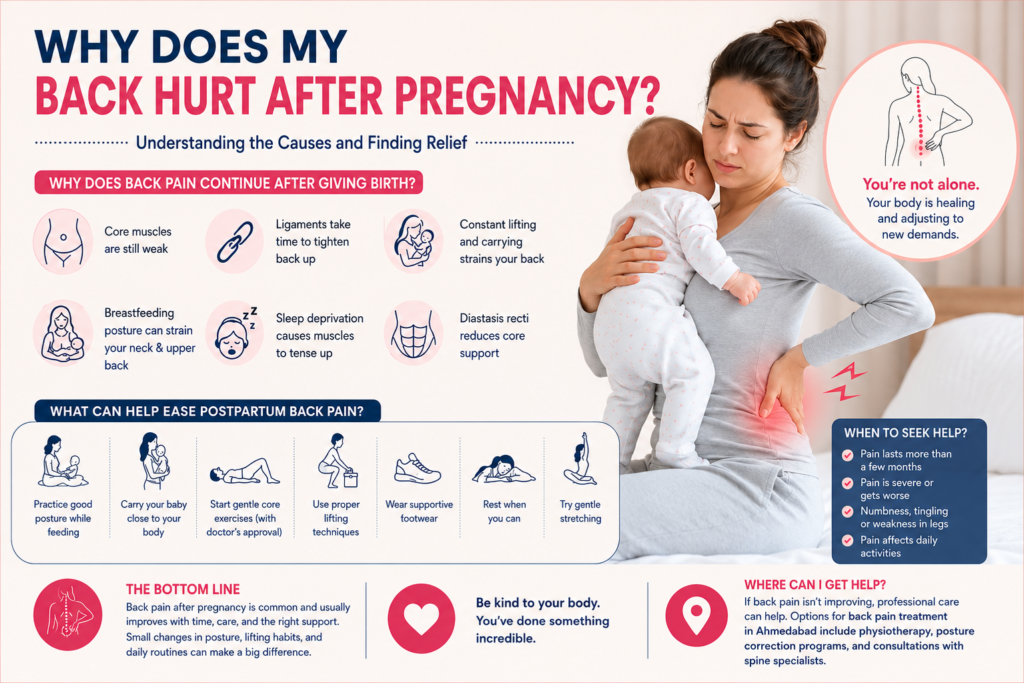
Why Does My Back Hurt After Pregnancy? Bringing a new baby home is exciting, exhausting, and honestly, a lot for your body to process. Somewhere between the sleepless nights and constant baby-holding, many new moms notice their back starting to ache in ways it never did before. If that’s you, you’re far from alone. Let’s talk about why this happens and what actually helps. Why Does Pregnancy Cause Back Pain in the First Place? Your body goes through massive changes over nine months, and your back takes on a lot of that load. Your growing belly shifts your center of gravity forward, changing your posture Extra weight puts more pressure on your spine and pelvis Hormones like relaxin loosen ligaments and joints to prepare for childbirth, which can make your lower back and pelvis feel less stable Weakened core muscles, since your abdominal muscles stretch significantly during pregnancy By the time you deliver, your back has already been working overtime for months. Why Does Back Pain Continue After Giving Birth? You’d think the back pain would ease up once the baby arrives, but for many women, it sticks around or even gets worse for a while. Your core muscles are still weak and need time to rebuild strength Ligaments loosened during pregnancy take weeks or months to tighten back up Constant bending, lifting, and carrying your baby puts repeated strain on your back Breastfeeding positions, especially hunching forward, can strain your neck and upper back Sleep deprivation makes muscles feel tighter and more sensitive to pain Some women experience a condition called “diastasis recti,” where the abdominal muscles separate during pregnancy, reducing core support for the back Basically, your body is recovering from a major physical event while immediately taking on new physical demands, like carrying a baby all day. Is This Normal, or Should I Be Worried? For most new moms, this kind of back pain is common and expected, not a sign that something is seriously wrong. Mild to moderate soreness in the lower back is typical in the weeks and months after delivery Pain usually improves gradually as your body heals and muscles regain strength It’s worth checking in with a doctor if pain is severe, doesn’t improve after several weeks, or comes with numbness, tingling, or weakness in your legs Most of the time, this is your body adjusting and rebuilding rather than something to panic about. What Can I Do to Ease Postpartum Back Pain? The good news is there are simple, practical steps that genuinely help. Practice good posture while feeding. Use a pillow to support your baby at chest height instead of leaning forward. Support your back while carrying your baby. Hold your baby close to your body rather than at arm’s length to reduce strain. Start gentle core exercises once cleared by your doctor. Pelvic tilts and gentle abdominal exercises help rebuild support for your spine. Use proper lifting technique. Bend your knees, not your back, when picking up your baby or their gear. Wear supportive footwear. Comfortable, supportive shoes make a real difference during long days on your feet. Rest when you can. Even short breaks lying down can relieve pressure on your back. Try gentle stretching. Cat-cow stretches and child’s pose can ease tension in the lower back. When Should I Consider Physical Therapy? If pain lingers beyond a few months or interferes with daily activities, physical therapy can be genuinely helpful. A physical therapist can assess posture, core strength, and movement patterns specific to postpartum recovery They can guide you through safe exercises tailored to your body’s healing stage Many women find structured guidance speeds up recovery compared to figuring it out alone Does Weight Play a Role in Postpartum Back Pain? Yes, weight can be a factor, both from pregnancy weight gain and any weight carried before pregnancy. Extra weight adds pressure on the spine and joints, which can prolong back discomfort during recovery. For most new moms, gradual weight loss through balanced nutrition and gentle activity, once cleared by a doctor, is enough to ease this pressure over time. In rare cases where weight-related health concerns persist long after pregnancy and significantly affect quality of life, some women may eventually discuss broader options like weight loss surgery with their doctor, though this is typically considered well after postpartum recovery and only after other approaches have been tried. Where Can I Get Help for Ongoing Back Pain? If your back pain isn’t improving on its own, seeking professional guidance can make a real difference. Options for back pain treatment in Ahmedabad include physical therapy, posture correction programs, and consultations with spine specialists who can identify the exact cause of your discomfort and recommend a suitable recovery plan. The Bottom Line Back pain after pregnancy is common and usually improves with time, gentle movement, and a little patience with your body. Simple changes to posture, lifting habits, and daily routines can ease a lot of the discomfort. If pain persists or feels severe, don’t hesitate to reach out for professional support. For personalized guidance on managing postpartum back pain, consulting an experienced specialist like Dr. Rohit Thaker can help you find the right recovery plan for your body.

Uncategorized

What Lifestyle Changes Help Recovery From Spinal Tuberculosis?

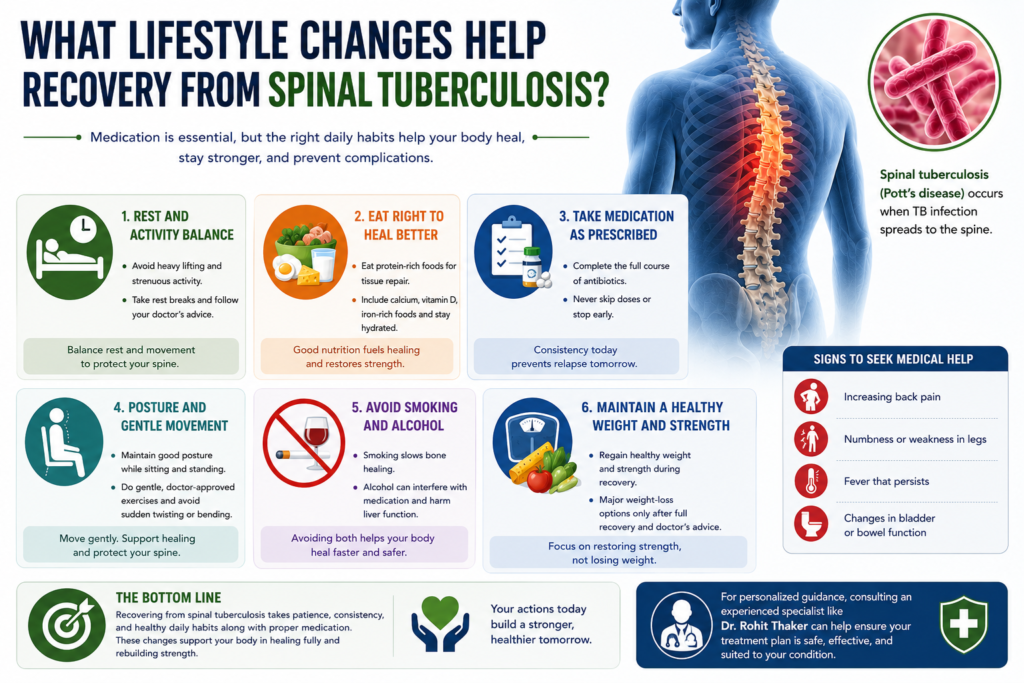
What Lifestyle Changes Help Recovery From Spinal Tuberculosis? Hearing the words “spinal tuberculosis” can feel overwhelming at first. It’s a serious condition, but with proper treatment and the right daily habits, most people recover well and go on to live full, active lives. Medication is the foundation of treatment, but what you do outside the doctor’s office matters just as much. Let’s go through the lifestyle changes that genuinely support recovery. What Is Spinal Tuberculosis, in Simple Terms? Spinal tuberculosis, sometimes called Pott’s disease, happens when the tuberculosis infection, usually known for affecting the lungs, spreads to the bones of the spine. It causes inflammation and, in some cases, damage to the spinal bones This can lead to back pain, stiffness, and in more advanced cases, changes in posture or nerve-related symptoms It’s treatable, especially when caught early and managed consistently with proper medication The most important part of treatment is completing the full course of prescribed antibiotics, but daily lifestyle habits play a major supporting role in how well and how quickly the body heals. Why Does Rest Matter So Much During Recovery? Your spine needs time and stability to heal, especially in the early stages of treatment. Avoid heavy lifting or strenuous activity until your doctor confirms it’s safe Short periods of rest throughout the day can reduce strain on the spine Complete bed rest for long periods usually isn’t recommended either, since gentle movement supports circulation and prevents stiffness Following your doctor’s specific activity guidelines matters more than general assumptions about “resting completely.” Balance is key: enough rest to protect healing bone, but enough movement to avoid becoming weak or stiff. How Does Nutrition Support Healing? Good nutrition plays a bigger role in tuberculosis recovery than many people realize, since the body needs extra resources to fight infection and repair tissue. Protein-rich foods like eggs, lentils, dairy, and lean meats support tissue repair Calcium and vitamin D help maintain bone strength, found in dairy products, leafy greens, and safe sun exposure Iron-rich foods like spinach and legumes help combat the fatigue and mild anemia sometimes seen during treatment Staying hydrated supports overall healing and helps the body process medication effectively Avoiding processed, low-nutrient foods gives the body more energy to focus on recovery Many people with tuberculosis experience weight loss during the illness, so the nutritional focus during recovery is usually on regaining strength, not losing weight. Why Is Medication Adherence So Important? This might be the single most important lifestyle habit during recovery. Tuberculosis treatment typically involves several months of antibiotics Skipping doses or stopping early, even when you start feeling better, can allow the infection to return, sometimes in a harder-to-treat form Setting daily reminders or using a pill organizer can help maintain consistency Regular follow-up appointments help your doctor track healing progress through scans or blood tests Sticking with the full treatment plan, even when it feels tedious, is what actually leads to full recovery. Do Posture and Gentle Movement Help Recovery? Yes, once your doctor gives the go-ahead for light activity. Gentle, doctor-approved stretching can help maintain flexibility without stressing the healing spine Good posture while sitting and standing reduces unnecessary strain Supportive braces, if recommended by your doctor, can help stabilize the spine during the healing process Avoid sudden twisting or bending motions until your doctor confirms your spine has stabilized Movement should always be guided by medical advice during this recovery period, since spinal tuberculosis directly affects bone stability. How Do Habits Like Smoking and Alcohol Affect Recovery? These habits can significantly slow down healing and interfere with treatment. Smoking reduces oxygen flow to tissues, which can slow bone healing Alcohol can interact negatively with tuberculosis medications and put extra strain on the liver, which is already processing multiple antibiotics Reducing or eliminating both during treatment supports faster, safer recovery Does Body Weight Affect Spinal Tuberculosis Recovery? Weight plays a role, though often differently than people expect. Many patients lose weight during active tuberculosis due to the infection itself, so the priority during treatment is usually restoring healthy weight and strength rather than reducing it. For patients with separate, pre-existing weight-related health conditions, options like weight loss surgery are generally not considered until well after tuberculosis treatment is complete and the spine has fully stabilized, since the body needs to focus its energy on healing during active treatment. Any decisions about significant weight management approaches should always be made in coordination with your treating doctor. Where Can I Get Specialized Care for Spinal Tuberculosis? Since spinal tuberculosis requires careful, ongoing monitoring, working with the right specialist makes a meaningful difference. Consulting a spinal tuberculosis specialist in Ahmedabad ensures your treatment plan is tailored to your specific stage of infection, with proper monitoring of both the infection and your spine’s stability throughout recovery. The Bottom Line Recovering from spinal tuberculosis takes patience, consistency, and a combination of proper medication, good nutrition, gentle movement, and healthy daily habits. While medication does the heavy lifting in clearing the infection, lifestyle choices support the body in healing fully and rebuilding strength. For personalized guidance through your recovery journey, consulting an experienced specialist like Dr. Rohit Thaker can help ensure your treatment plan is safe, effective, and suited to your specific condition.

Uncategorized

Could My Headaches Be Coming From My Neck?

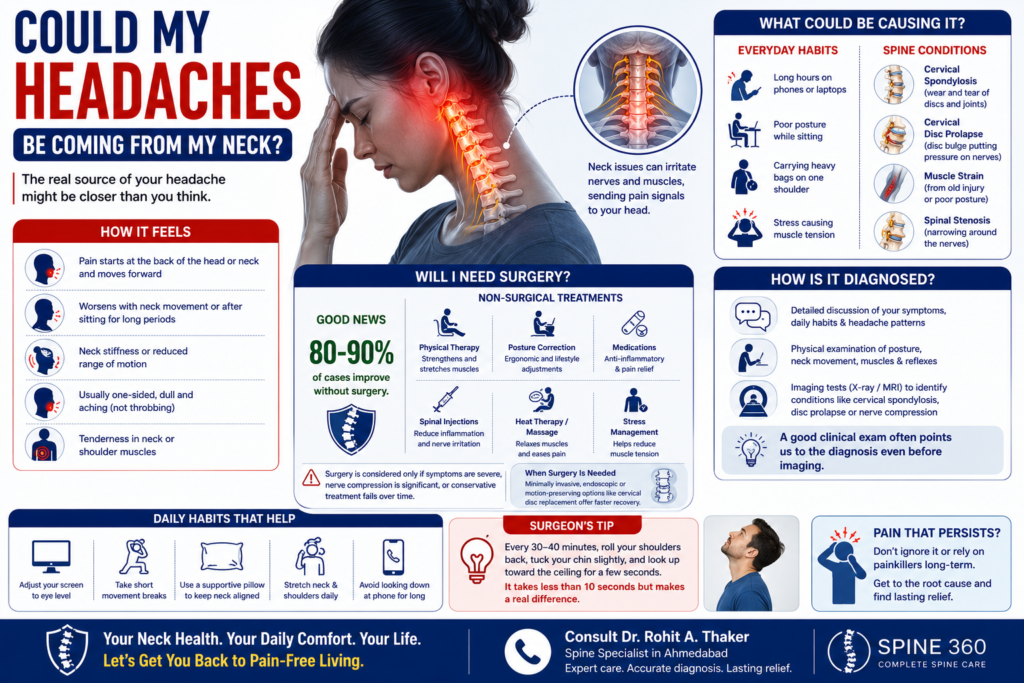
Could My Headaches Be Coming From My Neck? You’ve tried the usual fixes. Drinking more water. Cutting back on screen time. Even a stronger cup of coffee when things get bad. But that dull ache at the base of your skull keeps coming back, sometimes creeping up toward your temples by the end of the day. If painkillers only help for a few hours, it might be worth asking a different question: is this headache actually starting in your neck? Dr. Rohit A. Thaker, as a spine specialist in Ahmedabad, sees this pattern more often than most patients expect. The neck and head are connected by a dense network of nerves and muscles, so when something in your neck isn’t quite right, your head often pays the price. Let’s walk through why this happens and what you can do about it. Why Would a Neck Problem Cause a Headache? Think of your neck as the foundation that supports a bowling ball, your head, all day long. When that foundation is out of alignment or under strain, the muscles around it tighten up to compensate. Those tight muscles, along with irritated nerves near the base of your skull, can send pain signals upward. This is often called a cervicogenic headache, which simply means a headache that originates in the neck rather than the head itself. It’s a bit like a pinched garden hose. The blockage isn’t at the sprinkler, it’s further back at the source. Treating the head alone rarely fixes the real issue, and in some patients, the underlying driver turns out to be a spinal condition like cervical spondylosis, which is simply wear and tear of the neck’s discs and joints over time. What Does This Type of Headache Usually Feel Like? Not every headache is neck-related, so it helps to know the difference. Neck-related headaches often show up with a few telltale patterns: Pain that starts at the back of the head or neck and moves forward Discomfort that worsens with certain neck movements or after sitting for long periods Stiffness or reduced range of motion in the neck Pain that’s usually one-sided rather than affecting the entire head A dull, aching quality rather than sharp or throbbing pain Tenderness when pressing on the neck or shoulder muscles If this list sounds familiar, your neck may genuinely be the source. What’s Actually Causing the Strain? There isn’t just one culprit here. A few common causes tend to show up again and again in daily life, especially in a city like Ahmedabad where long commutes and desk-heavy jobs are the norm. Everyday Habits That Add Up Hours spent looking down at phones or laptops Poor posture while sitting at a desk Sleeping in an awkward position or using the wrong pillow Carrying heavy bags on one shoulder Stress, which causes muscles to tighten without you even noticing Underlying Spine Conditions Cervical spondylosis, the age-related wear and tear mentioned earlier Cervical disc prolapse, where a disc in the neck bulges and puts pressure on nearby nerves Muscle strain from an old injury that never fully healed In rare cases, spinal stenosis in the upper spine, which is a narrowing of the space around the nerves Most cases fall into the first category. But when symptoms are persistent or severe, an underlying spine condition is worth ruling out. Will I Need Surgery? This is usually the first question patients ask, and understandably so. The reassuring answer is that around 80 to 90 percent of spine-related problems, including most neck-related headaches, are managed without surgery. In the vast majority of cases, treatment starts with simple, non-surgical approaches: Physical therapy to strengthen and stretch neck muscles Posture correction and ergonomic adjustments Short-term use of anti-inflammatory medication Image-guided spinal injections for more stubborn pain Heat therapy or gentle massage Stress management techniques Surgery becomes a consideration only in specific situations, such as significant nerve compression from a cervical disc prolapse, or symptoms that haven’t improved despite months of proper conservative treatment. Even then, options like minimally invasive spine surgery and endoscopic spine surgery mean smaller incisions, less muscle damage, and noticeably quicker recovery than the open surgeries of years past. In select cases, a motion-preserving option like cervical disc replacement can also be considered instead of fusion. How Is the Cause Actually Diagnosed? You don’t need to guess what’s causing your headaches. At my practice, Spine 360, a proper evaluation usually involves: A detailed conversation about when your headaches occur and what makes them better or worse A physical examination of your neck’s movement, posture, muscle tenderness, and reflexes Imaging tests like an X-ray or MRI, if a structural issue such as cervical spondylosis or disc prolapse is suspected In fact, a good clinical exam alone often points us toward the diagnosis before we even look at a scan. This step-by-step process helps confirm whether your neck is truly the source, rather than something else entirely. A Note from the Surgeon Here’s something I tell almost every patient dealing with this issue: your headache probably started long before you noticed it. It builds up slowly, one long day at a desk at a time. One simple habit change I recommend to nearly everyone is this. Every 30 to 40 minutes, pause and gently roll your shoulders back, tuck your chin slightly, and look up toward the ceiling for a few seconds. This tiny reset counters the forward head posture that builds up during screen time, and it takes less than 10 seconds. Patients who do this consistently, even without any other treatment, often notice a real difference within a couple of weeks. Small, repeated habits tend to matter more than occasional big efforts when it comes to neck health. Recovery and Prevention Tips Whether you’re managing symptoms on your own or recovering from treatment, these habits genuinely help: Adjust your desk setup so your screen sits at eye level Take short movement breaks throughout the day Use a supportive pillow that keeps your

Uncategorized

Can Spinal Stenosis Cause Difficulty Walking?

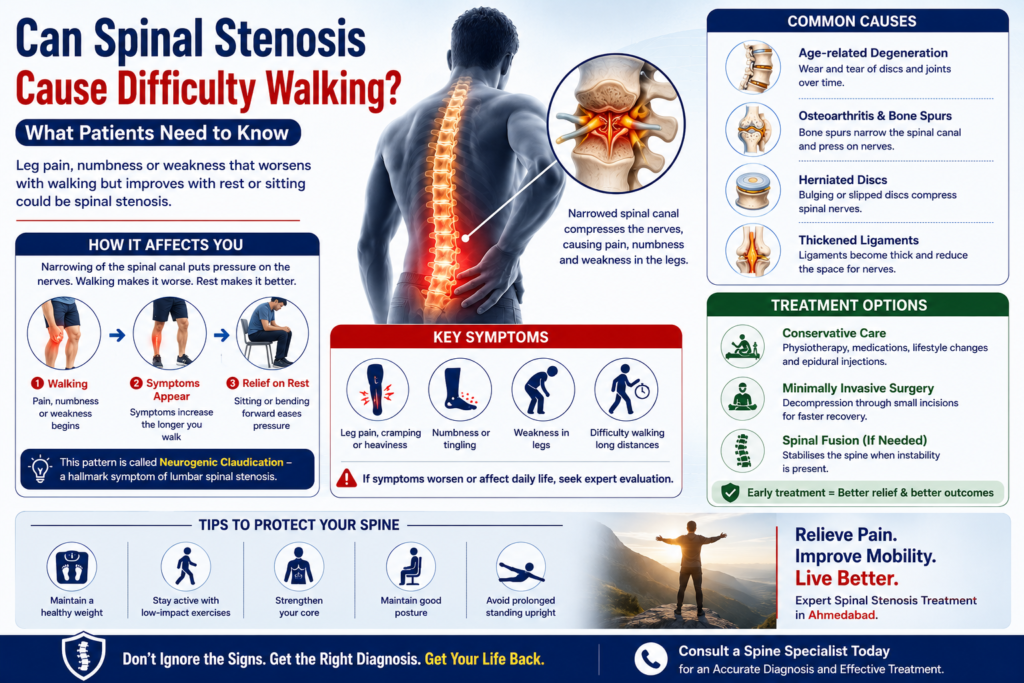
Can Spinal Stenosis Cause Difficulty Walking? You used to walk without thinking about it. Now, after a few hundred meters, your legs feel heavy, numb, or strangely weak, and you find yourself stopping more often than you should. Sitting down brings relief, but the moment you start walking again, the same feeling returns. If this pattern sounds familiar, you are not alone and you are not imagining it. What you are describing is one of the most classic presentations of spinal stenosis, a condition that affects thousands of patients across India, many of whom spend months or years attributing it to “old age” or “tiredness” before getting a proper diagnosis. For patients in Ahmedabad experiencing these symptoms, understanding what is happening in your spine and exploring Spinal Stenosis Treatment in Ahmedabad is the first step toward getting your mobility back. Why Does Spinal Stenosis Make Walking Difficult? This is the question patients most often ask, and the answer explains a lot. When you stand upright and walk, your lumbar spine naturally extends (arches slightly backward). This position reduces the already-narrowed space in the spinal canal even further, increasing pressure on the compressed nerves. The nerves, deprived of adequate blood flow and space, begin to send distress signals experienced as pain, numbness, heaviness, or weakness in the legs. When you sit down or lean forward like gripping a shopping trolley or sitting on a bench the lumbar spine flexes, opening up the spinal canal slightly. The pressure eases, the nerves recover, and the symptoms subside. This specific pattern of leg symptoms that worsen with walking and improve with sitting or bending forward has a clinical name: neurogenic claudication. It is the hallmark symptom of lumbar spinal stenosis, and recognising it is the key to getting the right diagnosis. Causes of Spinal Stenosis Spinal stenosis is usually a gradual process. The most common causes include: Age-related degeneration the most frequent cause; discs lose height, joints enlarge, and ligaments thicken over decades, collectively narrowing the canal Osteoarthritis bony spurs (osteophytes) grow inward from the vertebrae and facet joints, encroaching on nerve space Herniated discs disc material bulging into the canal compresses the nerves directly Thickened ligamentum flavum the ligament running along the back of the spinal canal can buckle and thicken with age, reducing canal space significantly Spondylolisthesis one vertebra slipping forward over another, distorting the canal Congenital narrowing some patients are born with a naturally narrower spinal canal, making them more susceptible to symptomatic stenosis earlier in life Symptoms Beyond Walking Difficulty While difficulty walking is often the most disruptive symptom, spinal stenosis produces a wider range of complaints: Lower back pain often a dull ache, sometimes radiating into the buttocks Leg pain, cramping, or burning typically in both legs, though one side may be worse Numbness and tingling in the feet, calves, or thighs Leg weakness a feeling of the legs “giving out” or unreliability when walking Reduced walking distance over time patients find they can walk shorter and shorter distances before needing to rest Bladder or bowel changes in more severe cases, nerve compression can affect continence; this requires prompt evaluation Risk Factors Age above 50 stenosis becomes significantly more common with age History of back problems, prior disc herniations, or spinal surgery Osteoarthritis affecting the spine Obesity increases load on the lumbar spine, accelerating degeneration Physically demanding occupations involving repeated bending or lifting Treatment Options for Spinal Stenosis Conservative Management Many patients with mild to moderate stenosis improve significantly with non-surgical treatment: Physiotherapy targeted exercises to strengthen core and back muscles, improve posture, and reduce load on the lumbar spine Pain management anti-inflammatory medications, nerve pain modulators, and muscle relaxants used appropriately Epidural steroid injections corticosteroid injected around the compressed nerve reduces inflammation and provides meaningful pain relief, sometimes for several months Activity modification understanding which postures and activities aggravate symptoms, and adjusting daily habits accordingly Minimally Invasive Surgical Options When conservative treatment fails to provide adequate relief, or when neurological symptoms are worsening, surgery becomes the right next step. The goal is decompression, creating more space for the compressed nerves. Modern surgical options include the following: Laminectomy removing part of the vertebral arch to widen the spinal canal; the most common surgical procedure for stenosis Laminotomy or laminoplasty, more limited procedures preserving more of the vertebral structure Spinal fusion performed alongside decompression when instability or spondylolisthesis is present, to stabilise the spine Many of these procedures can now be performed using minimally invasive techniques, offering smaller incisions, less muscle disruption, reduced blood loss, and faster recovery compared to traditional open surgery. Benefits of Early Treatment Choosing to address spinal stenosis before it becomes severely limiting carries real advantages: More treatment options remain available including less invasive approaches Nerves that have been compressed for shorter periods tend to recover more fully Quality of life is preserved avoiding years of restricted mobility and dependence on others Surgical outcomes are generally better in patients who have not developed significant muscle weakness or severe neurological deficit from prolonged compression Recovery Tips After Spinal Stenosis Surgery Begin gentle walking as early as your surgeon advises movement is a critical part of nerve recovery Commit to physiotherapy post-operative rehabilitation is not optional; it determines how fully you regain strength and mobility Avoid bending, twisting, and heavy lifting during the initial recovery period Sleep with a pillow between your knees if side-sleeping, to maintain spinal alignment Attend all follow-up appointments nerve recovery is gradual and needs monitoring Prevention and Lifestyle Tips While age-related degeneration cannot be fully prevented, these habits slow the process and reduce symptoms: Maintain a healthy body weight to reduce spinal load Stay physically active with low-impact exercise swimming, cycling, and walking (within your current tolerance) all support spinal health Strengthen your core a strong core reduces the load on lumbar structures Practice good posture, especially during prolonged sitting Avoid prolonged standing in an upright position if it reliably triggers your symptoms Final Thoughts Difficulty walking is not something you have

Uncategorized

Could Numbness in Your Legs Mean a Spine Issue? Here’s What You Need to Know

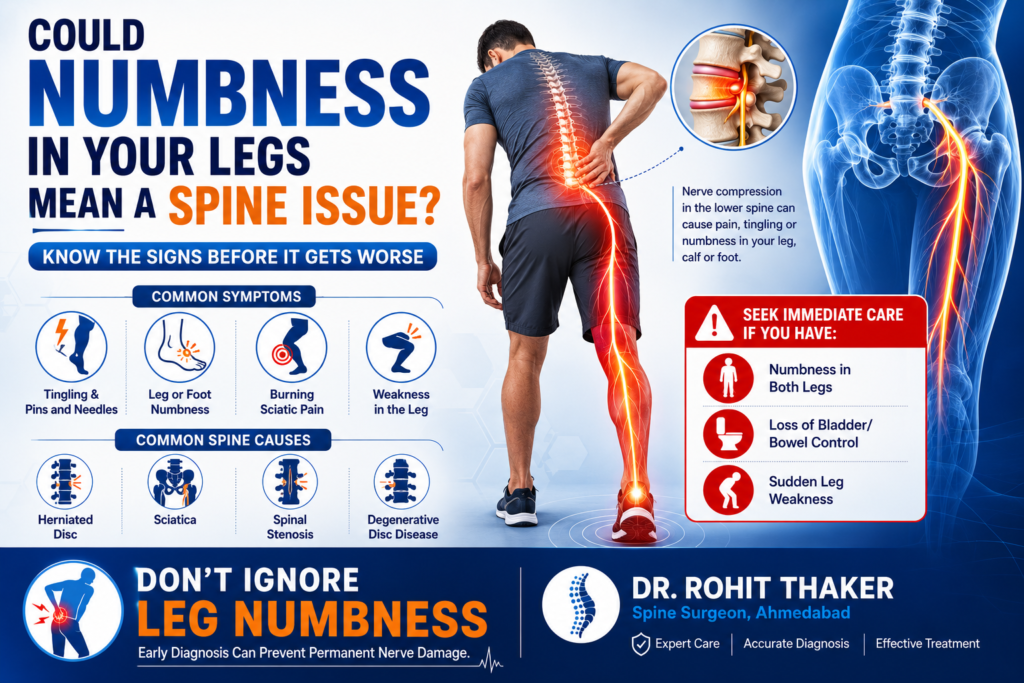
Could Numbness in Your Legs Mean a Spine Issue? Here’s What You Need to Know That strange tingling in your leg that won’t go away. The feeling of your foot “falling asleep,” except it happens at random, even when you’re just sitting at your desk. Many people brush off leg numbness as nothing serious, assuming it’s just a circulation issue or a passing cramp. But when it keeps coming back, or when it travels down from your lower back all the way to your foot, it’s worth paying closer attention. Leg numbness is one of the most common reasons patients come in seeking sciatica treatment in Ahmedabad , and for good reason. In many cases, what feels like a leg problem actually starts in the spine. Your Spine and Your Legs Are More Connected Than You Think The spine isn’t just a stack of bones. It’s the main highway for your nervous system. Nerves branch out from your spinal cord at every level and travel to different parts of your body, including your legs, feet, and toes. When something compresses or irritates these nerves, such as a bulging disc, a narrowed spinal canal, or inflamed tissue, the signal gets disrupted. And because nerves are long structures, you can feel the effects far from where the actual problem is. That’s why a disc issue in your lower back can cause numbness all the way down to your calf or foot. This is the fundamental reason why leg symptoms are often a spine problem in disguise. What Is Sciatica and Is That What You Have? The sciatic nerve is the longest nerve in the body. It starts in the lower spine, passes through the buttocks, and runs down the back of each leg. When this nerve gets compressed or irritated, usually by a herniated disc or bone spur in the lumbar spine, it can cause a very specific set of symptoms. Common signs of sciatica include: A sharp, shooting pain that starts in the lower back or buttock and travels down one leg Numbness or a “pins and needles” sensation in the leg, calf, or foot Weakness in the leg or difficulty lifting the foot (called foot drop in severe cases) Pain that worsens when sitting for long periods or when sneezing and coughing A burning or electric-shock sensation along the path of the nerve Most people experience these symptoms on one side of the body. If both legs are affected, that’s a more urgent sign that needs immediate evaluation. Sciatica isn’t a diagnosis on its own; it’s a symptom of an underlying spine condition. Identifying that root cause is what makes treatment effective. Other Spine Conditions That Can Cause Leg Numbness Sciatica gets most of the attention, but it’s not the only spinal condition that causes leg symptoms. Here are a few others worth knowing: Spinal Stenosis: This is a narrowing of the spinal canal that puts pressure on the nerves inside. It’s more common in people over 50. The numbness it causes tends to get worse with walking or standing and often improves when you sit down or lean forward slightly. Degenerative Disc Disease As spinal discs lose height and hydration over time, they can bulge or collapse, pressing on nearby nerve roots. This is one of the most common causes of radiating leg symptoms in middle-aged and older adults. Spondylolisthesis: This is when one vertebra slips forward over the one below it. The shift in position can pinch nerves and cause numbness, tingling, or weakness in the legs. Piriformis Syndrome Technically not a spinal condition, but closely related. The piriformis muscle in the buttock sits right next to the sciatic nerve. When it’s tight or inflamed, it can mimic sciatica almost exactly, which is why proper diagnosis matters so much. When Leg Numbness Becomes an Emergency Most cases of leg numbness from spine issues can be managed with appropriate treatment and time. But certain symptoms require urgent medical attention; please don’t wait if you notice the following: Sudden numbness or weakness in both legs Loss of bladder or bowel control Numbness in the groin or inner thighs (saddle area) Rapid worsening of symptoms over hours or days Numbness following a fall, accident, or trauma These can be signs of cauda equina syndrome, a rare but serious condition where multiple nerves in the lower spine are compressed simultaneously. It requires emergency treatment to prevent permanent nerve damage. Practical Steps You Can Take Right Now While you’re waiting for your appointment, or if your symptoms are mild, these steps can help manage discomfort: Avoid prolonged sitting: get up and walk for a few minutes every hour Apply a heat packto the lower back to ease muscle tension around the nerve Try gentle nerve gliding exercises(ask a physiotherapist to show you the right technique). Sleep on your sidewith a pillow between your knees to reduce spinal pressure Avoid heavy liftingor activities that increase the tingling or shooting sensation Don’t ignore worsening symptoms: if the numbness spreads or weakness appears, see a doctor promptly Prevention: Because the Best Outcome Is Avoiding the Problem Once you’ve recovered, keeping your spine healthy becomes the priority. Some habits that make a real difference: Strengthen your coreconsistently; a strong core is your spine’s best support system Maintain a healthy weight:every extra kilogram adds to the load your lumbar discs carry Stretch regularly, especially the hamstrings and hip flexors, which directly affect spinal alignment Be mindful of posturewhen driving, sitting at a desk, or using your phone for extended periods Stay active: a sedentary lifestyle is one of the biggest risk factors for recurrent disc problems Final remarks Leg numbness might seem like a minor inconvenience, but when it’s connected to the spine, it’s a signal worth taking seriously. Whether you’re dealing with the classic shooting pain of sciatica or a more subtle tingling that comes and goes, the underlying cause matters, and it can almost always be addressed effectively with the right care. If you’re looking for expert sciatica treatment, Dr.

Uncategorized

Why Does My Back Hurt When I Bend Forward?

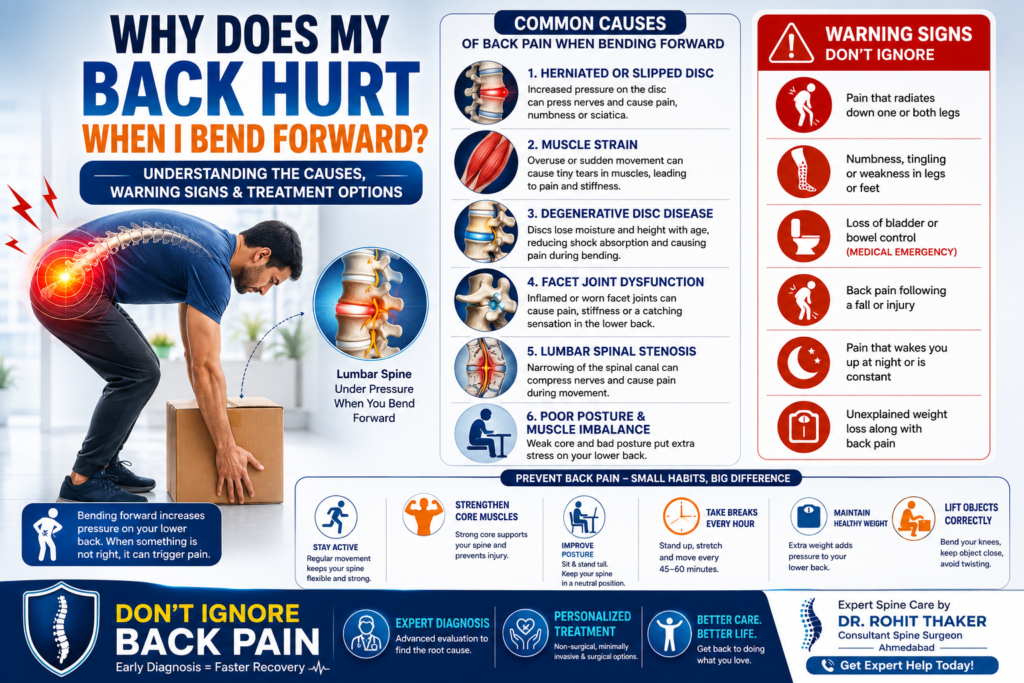
Why Does My Back Hurt When I Bend Forward? Have you ever reached down to pick up something from the floor and felt a sharp, stabbing pain shoot through your lower back? You’re not alone. Millions of people experience back pain when bending forward, and it’s one of the most common complaints seen in spine clinics across India. If you’ve been searching for reliable back pain treatment, understanding why this happens is the first step toward real relief. Back pain during forward bending doesn’t always mean something serious is wrong. But it does deserve attention, especially when the pain keeps coming back or starts affecting your daily life. What Actually Happens When You Bend Forward? When you bend forward, your spine isn’t just folding in half. Your vertebrae (the small bones that stack up to form your spine), the discs between them, and dozens of muscles and ligaments all work together in a carefully coordinated movement. When any part of this system is under stress, whether from injury, wear and tear, or poor posture, bending forward can trigger pain. The lower back, or lumbar region, takes the most load during this movement, which is why that’s usually where the pain shows up. Common Causes of Back Pain When Bending Forward 1. Herniated or Slipped Disc A disc herniation happens when the soft inner material of a spinal disc pushes out through a crack in its outer layer. Bending forward increases pressure on the disc, which can press on nearby nerves and cause pain, numbness, or a radiating sensation down the legs (often called sciatica). 2. Muscle Strain This is the most frequent culprit. Overusing your back muscles, through lifting, exercise, or even sitting in one position too long, can cause micro-tears in the muscle tissue. Bending forward stretches these already-irritated muscles, leading to sharp or aching pain. 3. Degenerative Disc Disease As we age, the discs in our spine naturally lose moisture and height. This makes them less effective as shock absorbers. Forward bending places extra stress on these weakened discs, causing discomfort and stiffness, especially first thing in the morning. 4. Facet Joint Dysfunction Facet joints are small joints at the back of each vertebra that help control spinal movement. When these joints become inflamed or worn down (a condition called facet arthropathy), bending forward can feel stiff, painful, or even cause a “catching” sensation in the spine. 5. Lumbar Spinal Stenosis Stenosis means narrowing. When the spinal canal narrows, it can compress the nerves running through it. Interestingly, people with stenosis often feel more relief when bending forward (which opens the canal slightly), but prolonged flexion can still aggravate symptoms. 6. Poor Posture and Muscle Imbalance Spending hours hunched over a desk or phone weakens the core muscles that support the spine. Without this support, even simple movements like bending down become painful over time. Warning Signs You Shouldn’t Ignore Most back pain resolves on its own with rest and basic care. But certain symptoms call for prompt medical attention: Pain that radiates down one or both legs Numbness, tingling, or weakness in the legs or feet Loss of bladder or bowel control (this is a medical emergency) Back pain following a fall or injury Pain that wakes you up at night or is constant Unexplained weight loss alongside back pain If any of these apply to you, please don’t delay , consult a spine specialist right away. Back Pain Treatment: What Are Your Options? The good news is that the majority of back pain cases respond well to non-surgical treatment. Here’s what modern spine care looks like: Conservative (Non-Surgical) Treatments Physiotherapy– Targeted exercises to strengthen the core, improve flexibility, and correct posture are often the most effective long-term solution Medications—Pain relievers, anti-inflammatory drugs, and muscle relaxants can provide short-term relief Hot and cold therapy– Simple but effective for reducing inflammation and muscle tension Epidural steroid injections– For nerve-related pain that hasn’t improved with other methods Minimally Invasive Procedures When conservative care isn’t enough, minimally invasive options can help, with far less recovery time than traditional surgery. Services available at Dr. Rohit Thaker’s clinic include targeted nerve blocks, disc procedures, and other advanced interventional treatments. Surgical Treatment Surgery is considered only when all other options have been tried and symptoms are severely affecting quality of life. Common procedures include microdiscectomy (for herniated discs) and spinal decompression (for stenosis). Dr. Rohit Thaker is an experienced spine surgeon in Ahmedabad who guides patients carefully through these decisions. Recovery Tips to Help You Heal Faster Whether you’re managing back pain at home or recovering after a procedure, these practical steps make a real difference: Don’t stay in bed too long: Gentle movement helps recovery; prolonged bed rest can actually worsen stiffness Apply ice in the first 48–72 hoursof a new injury, then switch to heat Sleep on your sidewith a pillow between your knees to take pressure off the spine Avoid bending from the waist:instead, bend your knees and squat when picking things up Stay hydrated;your spinal discs are mostly water and need hydration to function well Follow your physiotherapy planconsistently, even on good day How to Prevent Back Pain From Coming Back Prevention is always better than treatment. Small daily habits go a long way: Strengthen your core:  Exercises like planks, bridges, and gentle yoga support the spine without straining it Mind your postureat your desk, in the car, and while using your phone Take regular breaksfrom sitting; aim to stand and move every 45–60 minutes Wear supportive footwear: poor footwear affects your entire posture chain Maintain a healthy weight: extra weight increases spinal load significantly Lift correctly: always bend at the knees, keep the object close to your body, and avoid twisting while carrying Final Thought Back pain when bending forward is your body’s way of saying something needs attention. Whether it’s a minor muscle strain or a more complex disc issue, understanding the cause is the key to finding the right solution. With the right diagnosis, a structured treatment plan,

Scroll to Top